The World Health Organization (WHO) has warned that the current Ebola outbreak in the Democratic Republic of the Congo (DRC) is intensifying at an unprecedented rate, calling for an immediate surge in health response efforts. Health authorities report 3,874 confirmed cases, including 1,751 deaths, since the outbreak began. This marks one of the deadliest outbreaks the country has faced, with nearly 2,300 fatalities and 3,500 cases recorded between 2018 and 2020.
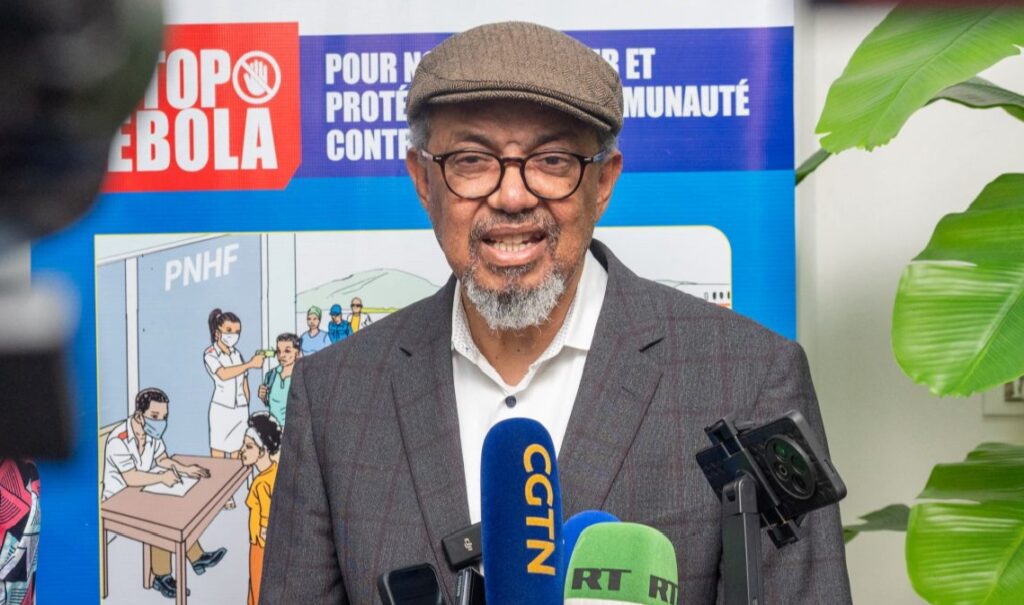
WHO Director-General Tedros Adhanom Ghebreyesus arrived in Kinshasa, the DRC’s capital, on Tuesday. A meeting with President Félix Tshisekedi was scheduled for Wednesday, according to a WHO representative. Earlier, in late May, the WHO chief visited Ituri, a northeastern province and the epicenter of the current outbreak, where nearly 90% of cases have been reported.
The surge is driven by the Bundibugyo variant, for which no vaccine or treatment currently exists. The epidemic is spreading across regions with fragile state presence and under-resourced healthcare systems.
«The outbreak continues to spread at a pace that exceeds response capacities,» warned a WHO spokesperson, Tarik Jasarevic, during a press briefing in Geneva. He urged for increased financial support and resources to bolster treatment capabilities, field investigation teams, and safe burial practices.
Ebola, transmitted through bodily fluids, causes severe hemorrhagic fever and has claimed over 15,000 lives across Africa in the past five decades. The current outbreak has expanded to five provinces in the DRC: Ituri, North Kivu, South Kivu, Haut-Uélé, and Tshopo.
On Tuesday, Canada approved clinical trials for a potential vaccine against the Bundibugyo strain, developed by US pharmaceutical giant Moderna. The candidate, identified by the WHO as «the most promising», is the «rVSV Bundibugyo» vaccine. Singapore-based Hilleman Laboratories will also contribute to its development.
By late July, the first volunteer had received a dose of another Bundibugyo vaccine, created by the University of Oxford in the United Kingdom. This vaccine shares the same technology as AstraZeneca’s Covid-19 immunization. Researchers are also accelerating trials for treatments, including antivirals remdesivir and obeldesivir, as well as the monoclonal antibody MBP134.
The DRC declared its 17th Ebola outbreak on May 15, weeks after the first cases emerged, across a territory of over 100 million people.