Chad’s trade landscape: China leads imports, UAE dominates exports
Two global economic powers play strikingly different, yet dominant, roles in Chad’s international trade.
China: Chad’s Indispensable Supplier
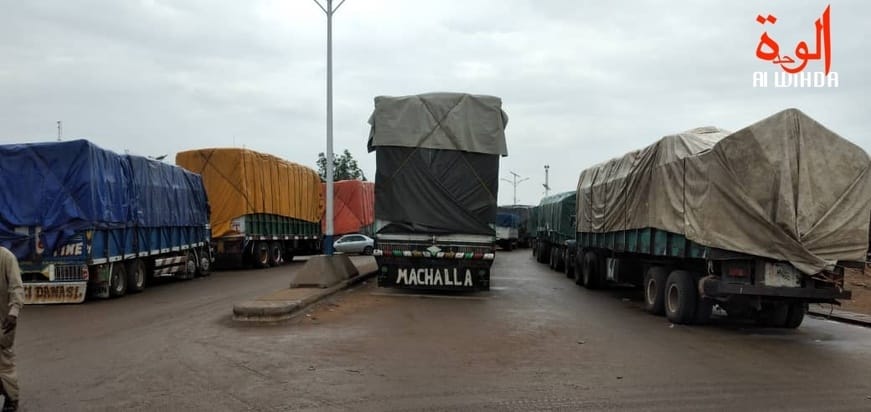
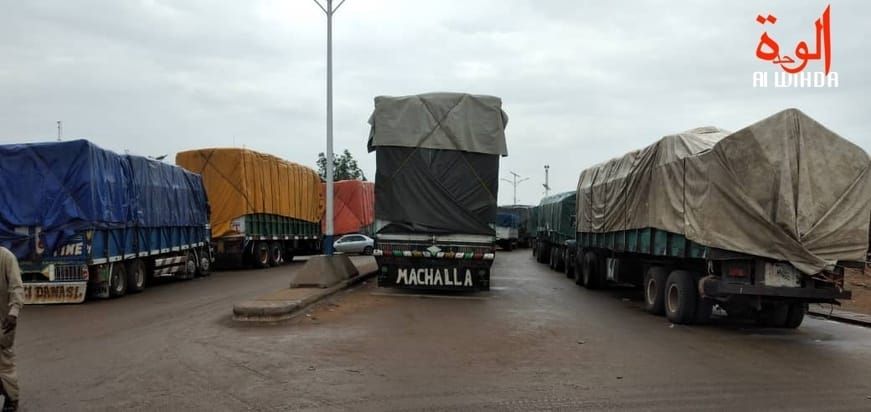
China stands as Chad’s undisputed leading supplier, delivering goods valued at 306.5 billion FCFA in 2025, which accounts for an impressive 30.7% of the nation’s total imports. No other trading partner comes close to this dominant position. Cameroon, the second-largest supplier, trails significantly with 108.4 billion FCFA in goods, roughly one-third of China’s contribution. Libya follows in third place, providing 85.8 billion FCFA, or 8.6% of imports.
The composition of Chinese exports to Chad clearly defines this commercial relationship: predominantly manufactured products, industrial machinery, and everyday consumer items. This reflects a classic North-South trade dynamic, where the African nation absorbs industrial output from the Asian economy, often in exchange for raw materials. Beijing has successfully implemented this model across the African continent over the past two decades.
United Arab Emirates: A Strategic Export Hub
The scenario shifts dramatically when examining Chad’s exports. The United Arab Emirates emerges as the primary destination for Chadian goods, purchasing 333.3 billion FCFA, representing 26.2% of total exports. The UAE surpasses Malaysia, which accounts for 297.8 billion FCFA (23.4%), and Germany, at 279.9 billion FCFA (22%).
The role of the Emirates here is less about direct consumption and more about serving as a global redistribution platform. Major hubs like Dubai and Abu Dhabi facilitate the transit of Chadian crude oil, where it may undergo processing or blending before being re-routed to various international markets. This intermediary function proves financially beneficial for the UAE and acceptable to Chad. However, it also means that N’Djamena often lacks full transparency regarding the ultimate destination of its valuable resources.
Key Trade Figures:
- 30.7% of imports — originate from China, a regional benchmark.
- 26.2% of exports — are channeled through the United Arab Emirates.
- 79.8% of top 10 partners — illustrates the concentration of imports among ten key countries.
France and the United States: Present, but Lagging
Despite its historical ties, France accounts for only 5.1% of Chad’s imports, totaling 50.9 billion FCFA, placing it sixth among suppliers. The United States holds the fifth position with 53.0 billion FCFA, representing 5.3% of imports. These figures underscore a gradual reorientation of Chad’s commercial partnerships towards Asia, the Middle East, and emerging economies, moving away from traditional Western powers.
India (4.3%), Togo (3.6%), Brazil (2.9%), and Turkey (2.3%) further diversify Chad’s import landscape. While the nation is broadening its sources of supply, it remains heavily reliant on China for the sheer volume of goods imported.
Reconfiguring a Geography of Dependencies
The strategic insight from this trade analysis is clear: Chad’s exports flow to a very concentrated group of destinations, with the top ten buyers absorbing 98.9% of all exports. Concurrently, while import sources are somewhat more varied, they remain overwhelmingly dominated by Beijing. This dual concentration exposes Chad to potential external economic shocks, a risk that a more robust policy of commercial diversification—for both exports and imports—could significantly mitigate.