An unprecedented audit of the Democratic Republic of Congo’s (DRC) national police force has exposed a massive irregularity: out of 157,886 officers officially listed, 63,817 are either fictitious or inactive. This revelation raises serious concerns about the country’s ability to maintain public safety and security.
The audit, conducted by government authorities, highlights a critical gap between recorded personnel and actual operational forces. The discovery has slashed the already low police-to-citizen ratio, leaving communities vulnerable to rising crime rates, particularly in Kinshasa, where armed robberies, kidnappings, and violent assaults have surged in recent months.
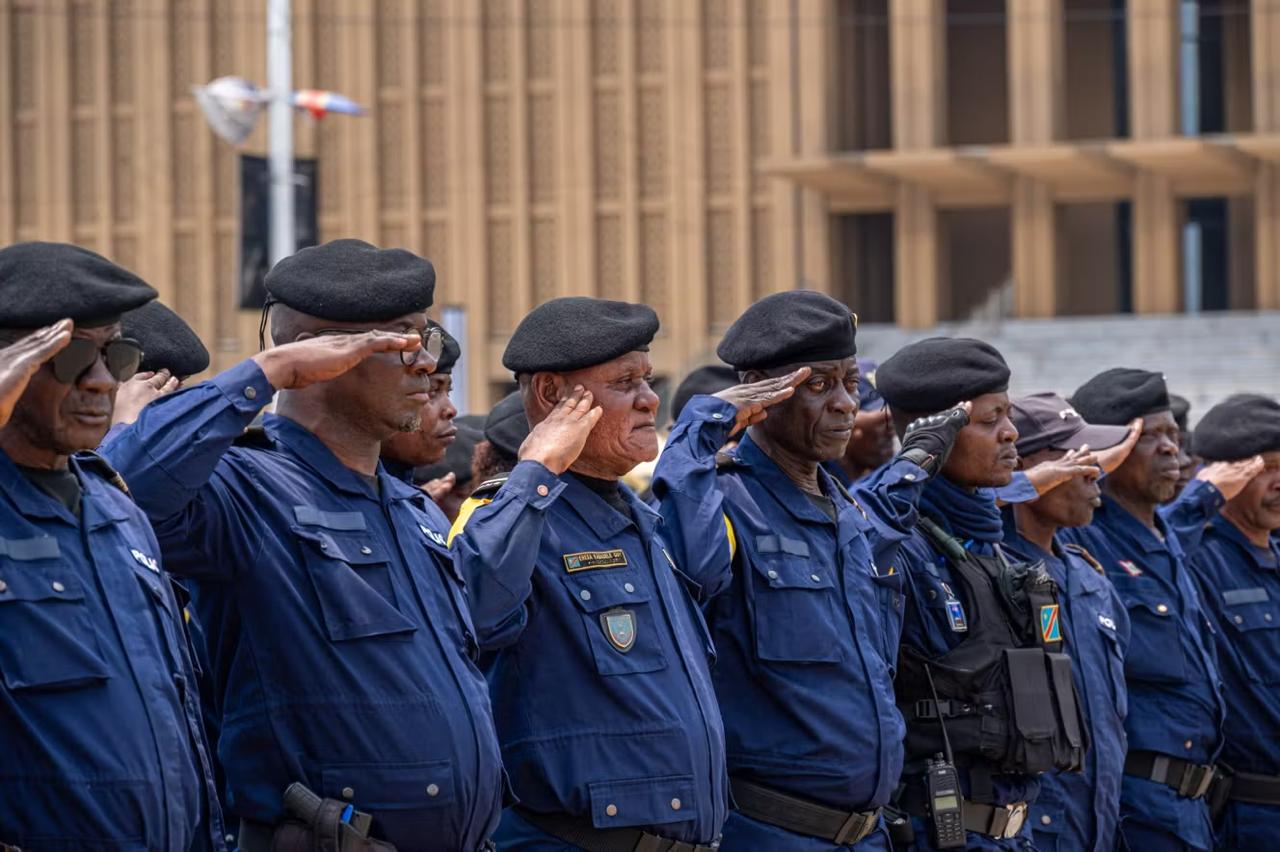
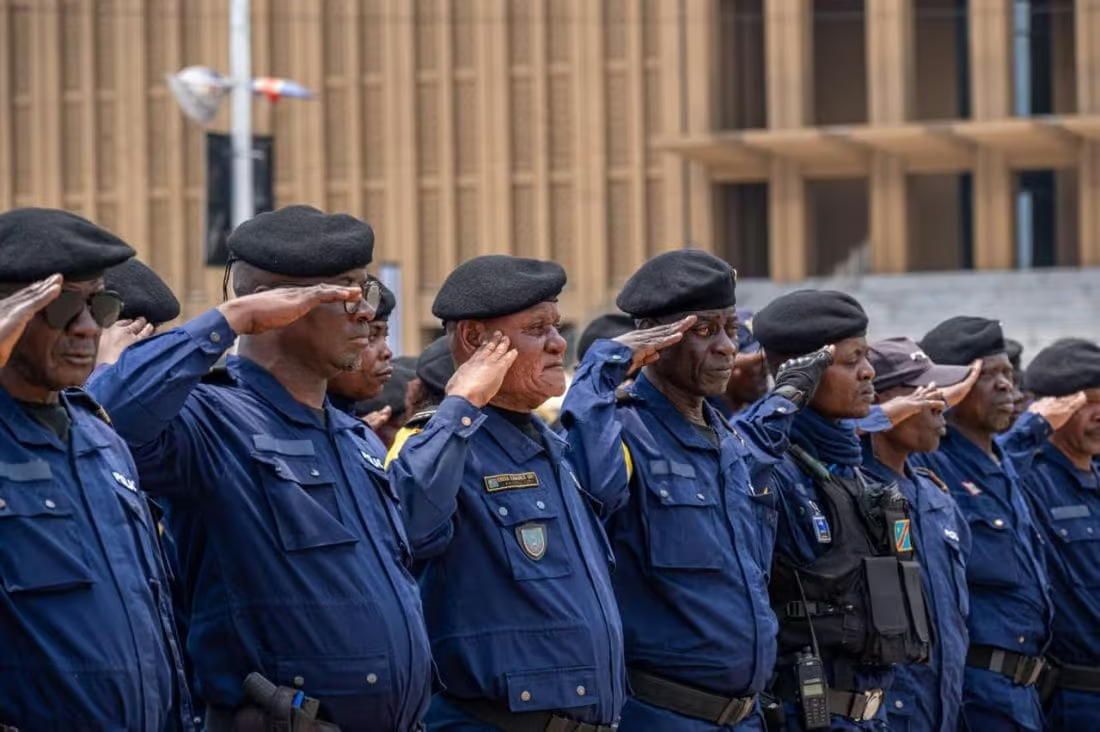 Congolese police officers take part in a parade in Kinshasa on February 24, 2025. © HARDY BOPE / AFP
To address this crisis, authorities have launched a nationwide verification campaign. The initiative begins in Kinshasa before expanding to all 25 provinces, aiming to create a biometric database that will eliminate duplicates, ghost employees, and streamline payroll, recruitment, and promotions. The move is part of a broader police modernization plan extending through 2030, with a budget of $2.55 billion earmarked for recruiting and training 90,000 new officers, restructuring security institutions, and enhancing community policing.
financial and security implications of the audit
The audit’s findings reveal staggering financial losses—between $99.8 million and $233 million annually—due to fictitious or inactive officers on the payroll. President Félix Tshisekedi has called for intensified efforts to dismantle criminal networks while accelerating reforms to bolster the police force’s efficiency. The government’s strategy includes stricter oversight, transparent hiring practices, and closer collaboration with local communities to rebuild trust in law enforcement.
The audit’s timing coincides with growing public frustration over persistent insecurity. In Kinshasa alone, reports of violent crime have surged, with residents voicing concerns over the police’s inability to curb gang violence and protect civilians. Authorities acknowledge the urgency of the situation, emphasizing that restoring order requires both immediate action and long-term institutional reforms.