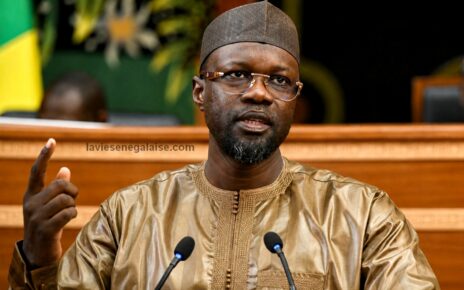
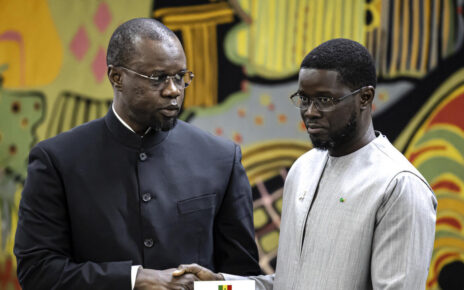
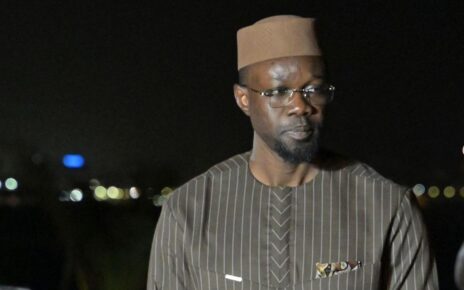
The President of Senegal, Diomaye Faye, and the Prime Minister, Ousmane Sonko, seem to be caught in a dance of mutual appreciation and subtle tension, much like the iconic lyrics of Serge Gainsbourg’s Je t’aime… moi non plus.
Following a coalition meeting that appeared laborious and led by Sokhna Aminata Touré Mimi alongside key figures like Thiamigne Abdourakhmane Diouf, Me Abdoulaye Tine, and Serigne Guèye Diop, the intricacies of Senegalese political maneuvering have once again taken center stage.
Senegal’s political landscape often resembles a theatrical farce, with shifting alliances and calculated moves. Three key hypotheses emerge from this delicate dance:
1. Ideological friction behind the scenes
There is a real ideological divide between the two leaders of the executive branch. Yet, they possess the wisdom to set aside differences to preserve appearances—and, by extension, the stability of the Republic. Both understand the necessity of relying on each other in the current socio-economic climate.
2. A strategic power play
President Diomaye Faye established this political platform to balance power dynamics between himself and his mentor, Ousmane Sonko. As the head of state, he must assert his authority amid pressure from hardline factions within his circle. However, lacking a robust political apparatus, he hesitates to escalate their rivalry. This hesitation was evident during the recent volte-face at the Mbour stadium, where he notably skipped the event.
3. Controlling the narrative
Both leaders employ a containment strategy to stifle opposition and dominate public discourse. By orchestrating a contrived crisis, they aim to expose their true adversaries, targeting them swiftly to weaken their influence. This approach also serves to isolate the opposition, reducing it to a marginalized and opportunistic role in the political arena.
Senegal’s political theater continues to unfold in Ndoumbelane, a land of both wonder and complexity.