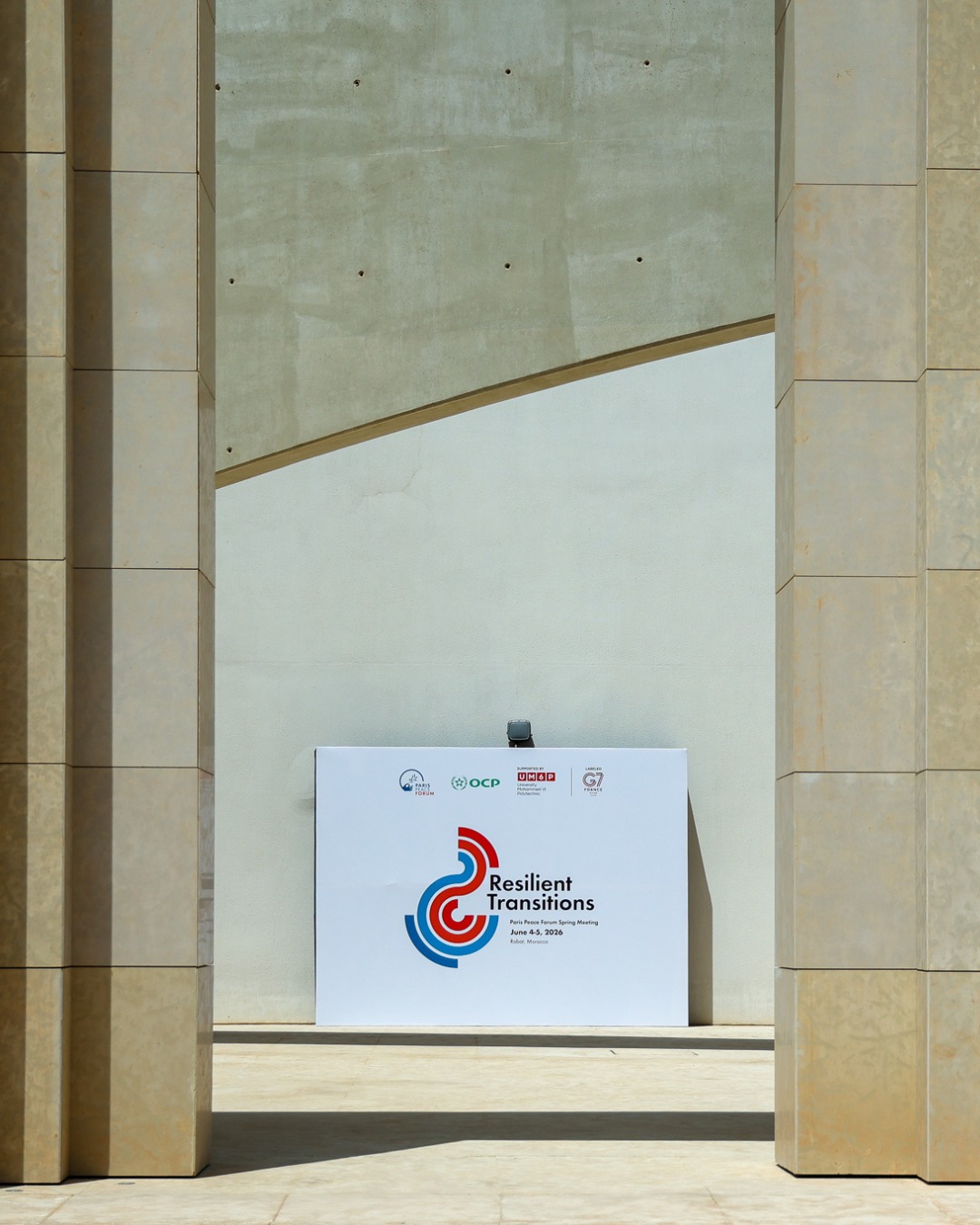
Philippe Lalliot, the newly appointed French ambassador to Morocco, chose the spring session of the Paris Peace Forum hosted at Université Mohammed VI Polytechnique (UM6P) in Rabat on 4–5 June 2026 for his first public address. The speech came just after he presented his credentials to the King.
Facing the deadlock of crises and shockwaves that now affect every nation, Lalliot reaffirmed the relevance of multilateral rules. ‘International law is not dead. Its founding principles are just. It must be defended on principle, because it is precisely the shield of those who have none,’ he stated, emphasising its role as a common good.
For the diplomat, international law remains ‘the condition for peace, stability, and security for the greatest number’.
‘We are here in the right place, at the right time, and in good company to reflect on the ways and means by which we can together ensure that these major upheavals, these transitions, become the subject of concrete, realistic, and adapted solutions,’ he said, advocating to ‘transform our hopes and ambitions into projects and actions’.
The ambassador underscored that reflection on major global imbalances and the search for solutions are ‘at the heart of the exceptional partnership that unites France and Morocco’.
Lalliot described this ‘Franco-Moroccan method’ as a model for others. ‘I am convinced that our two countries, through their shared history and common vision of these challenges and the future, have the responsibility to set an example,’ he said, adding that this responsibility involves broad mobilisation, especially ahead of important bilateral or multilateral milestones.
He illustrated his point with a project already launched upon his arrival. ‘Two days ago, alongside Morocco’s Minister of Equipment and Water, and my German, Italian, and European counterparts, we launched a vast programme of nearly €350 million to support Morocco’s national water strategy.’
Strategic for Morocco’s water sovereignty, the project aims to improve understanding of water resources, particularly groundwater, coordinated management of climate-related water events—especially floods—and other initiatives such as wastewater reuse.
As debates in Rabat concluded on energy and food security—topics set to take centre stage at the G7 in Évian from 15 to 17 June—France and Morocco are preparing a new cooperation framework, the finalisation of which is imminent.