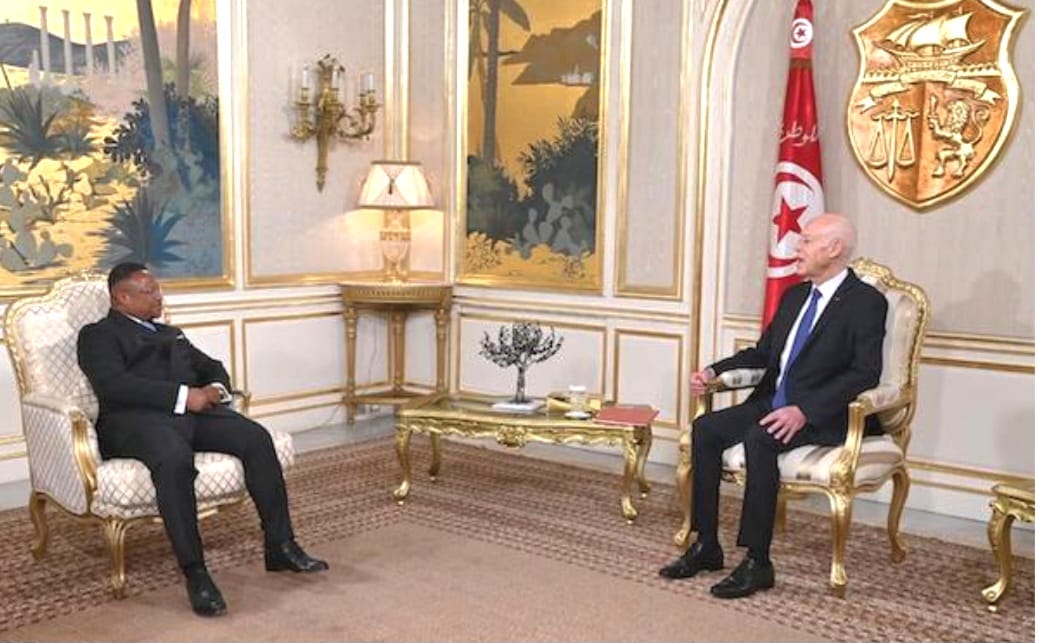
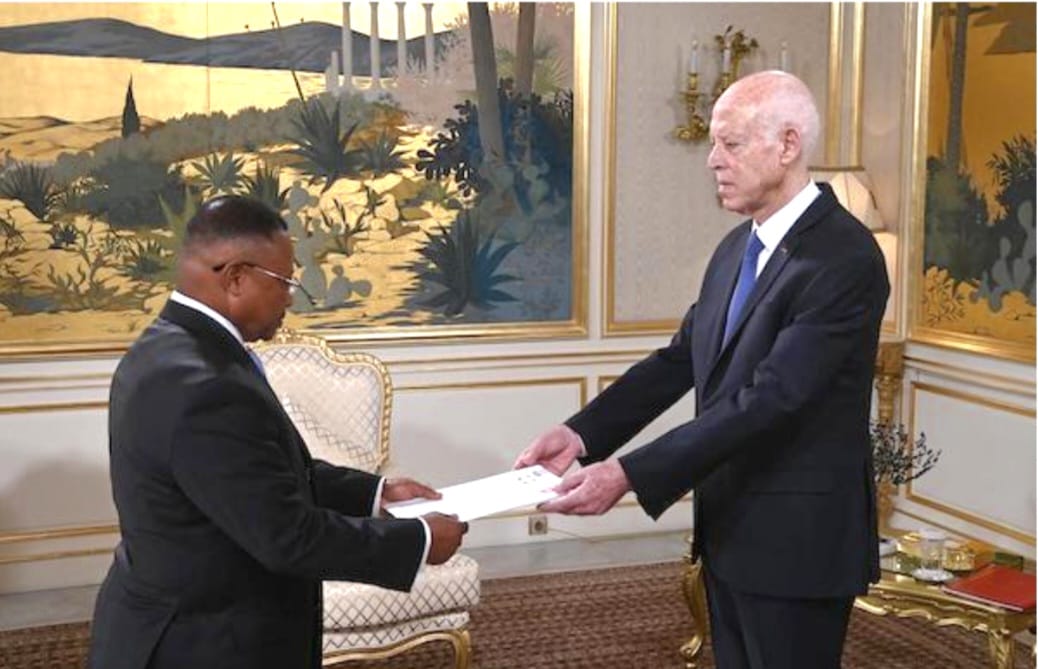
In an interview granted to the specialised press service of the Central Directorate of Communication at the Ministry of Foreign Affairs, the Ambassador Extraordinary and Plenipotentiary of Gabon to the Republic of Tunisia, Pierre Ntsiet Ngolo, outlined the roadmap for his diplomatic mission following his appointment in March 2024 and the presentation of his credentials to Tunisian President Kaïs Saëd on 6 November 2025. A seasoned diplomat, Pierre Ntsiet Ngolo makes a “firm, constant and unfailing commitment” to continue, with his teams and the support of the central administration, working resolutely to strengthen the friendly and cooperative ties along the Libreville-Tunis axis, while ensuring the protection and well-being of the Gabonese community living in Tunisia.
One of the first actions of the new diplomatic and consular authorities of Gabon in Tunisia was to foster a dynamic of associative cohesion, similar to organisations of other Gabonese diasporas worldwide, which led to the establishment of two frameworks for consultation and solidarity.
The first is the federative body called the Council of Gabonese in Tunisia (C.G.T.), which brings together the approximately one thousand Gabonese citizens living in the country — students, trainees, professionals and married individuals — around charitable and humanitarian values of mutual aid, equity and fraternity. The second, composed mainly of students and trainees, is known as the Association of Gabonese Students and Trainees in Tunisia (A.E.S.G.T.).
“Unity and cohesion within the community have become a tangible reality, particularly observed during the first edition of the Gabonese Cultural Days held on 24 and 25 April, which demonstrated our community’s ability to come together around values of solidarity and fraternity,” Ambassador Pierre Ntsiet Ngolo said with satisfaction.
Consolidating gains
Indeed, one of the main axes of bilateral relations between Gabon and Tunisia concerns academic cooperation, illustrated by the significant number of Gabonese students and trainees present in Tunisia’s various university hubs. These young people, often facing the strictness of immigration policies, require crucial support.
Working in a context marked by migration challenges, the reality is harsh for some of these students who encounter administrative difficulties linked in particular to renewing their residence permits, often due to delays in paying tuition fees.
“In this regard, I would like to use this platform to sound the alarm to families and the National Scholarship Agency of Gabon (ANBG) so that timely arrangements can be made for financial support, thereby alleviating the difficulties of these young compatriots confronted with the strictness of Tunisian immigration regulations,” the Ambassador pleaded.
Health cooperation is also a priority area for the new heads of Gabon’s diplomatic representation in Tunis. This is facilitated by an agreement between the National Health Insurance Fund of Gabon (CNAMGS) and specialised Tunisian operators in medical evacuations, given the high quality of Tunisia’s technical platform and medical expertise.
“Our responsibility is to consolidate these achievements and develop new partnerships capable of supporting the development ambitions of both our states. This means strengthening dialogue with our institutional partners and focusing most of our actions on economic diplomacy. It also involves exploring various new mutually beneficial avenues based on the expertise and potentialities that each country possesses, which should be exploited within the framework of co-development,” Pierre Ntsiet Ngolo suggested.
Core target
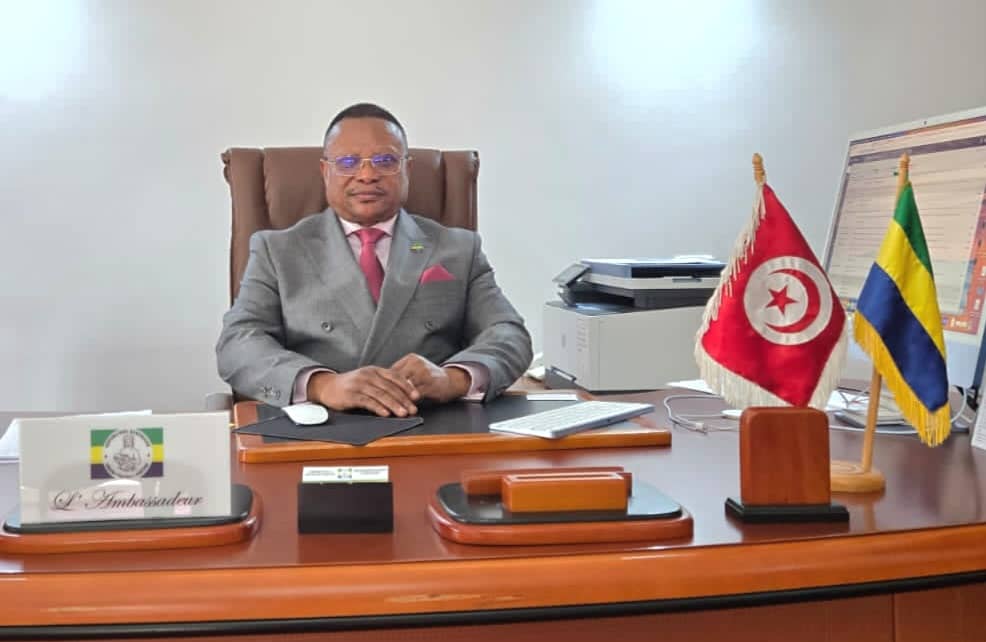
“All are key economic players who align with a sustainable pan-African vision and prospects for shared prosperity. In this regard, the organisation of economic missions led by Tunisian operators is an encouraging sign, the benefits of which should materialise through the signing of investment agreements and partnerships,” the Gabonese Ambassador to Tunisia promised.
Pierre Ntsiet Ngolo, apart from the management of diplomatic relations, also takes great pride in having developed, from the start of his tenure, a number of consular assistance mechanisms for resident Gabonese nationals. “This call for unity was positively received by the community, which had long felt a sense of abandonment,” he concluded.