Gabon: fostering trust from Libreville to the provinces
Libreville, Wednesday, July 15, 2026 – A truly unprecedented political event unfolded in Gabon, marking a significant departure from traditional African governance. One hundred and fifty influential community leaders from a Gabonese province were invited to journey from their home regions, witness the ongoing transformation of the capital city, and subsequently engage in direct discussions with the Head of State about their observations and the nation’s future direction.
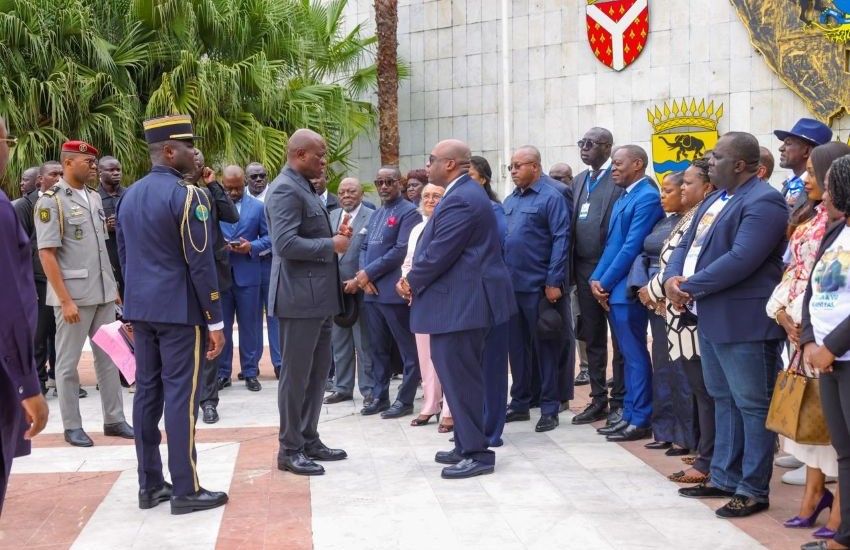
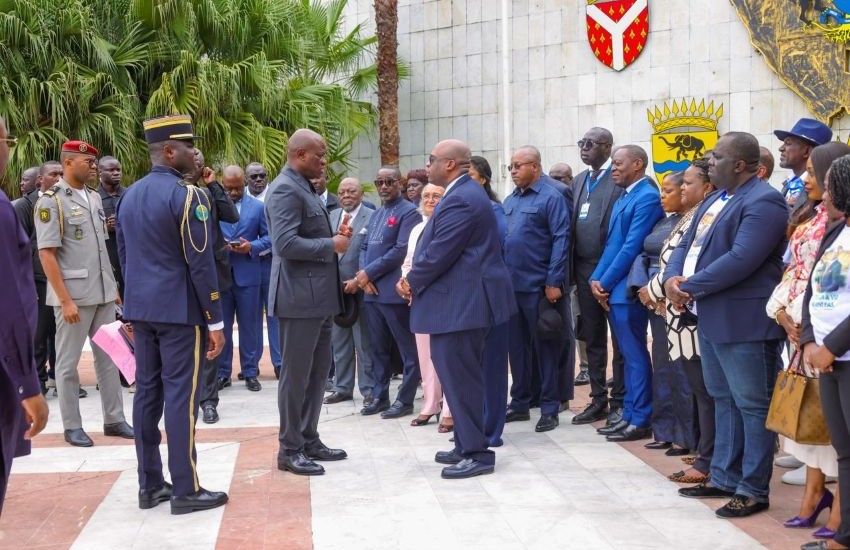
This pivotal institutional gathering, which saw the Ogooué-Maritime delegation received at the Presidential Palace on Tuesday, July 14, underscores a new governance philosophy. It is a strategy built upon tangible results, fostering direct political engagement, and educating the populace about public policy initiatives.
After immersing themselves for several days in Libreville’s major infrastructure projects, representatives from Port-Gentil, Omboué, and Gamba were granted an audience with President Brice Clotaire Oligui Nguema. They personally observed a capital undergoing rapid modernization, a direct outcome of the new trajectory set since the President assumed leadership. This innovative approach extends beyond mere ceremonial visits; it represents a deliberate effort to connect regional territories with central decision-making bodies and to involve citizens in comprehending the public policies shaping Gabon’s tomorrow.
Governing through visible achievements
The delegation from Ogooué-Maritime was notably diverse, a rarity in such institutional exercises. Mayors, municipal and departmental councilors, respected members of the Communal Council of Elders, neighborhood leaders, entrepreneurs, digital influencers, and key opinion shapers were all invited to this immersive experience, gaining firsthand insight into the capital’s ongoing developments.
The careful selection of these individuals was strategic. In any contemporary society, opinion leaders play a critical role in shaping public perception of government actions. Citizens are often swayed more by what they personally observe than by what they hear, placing greater trust in direct accounts than in official statements. By empowering local stakeholders to witness the progress of infrastructure and critical projects themselves, the executive is choosing a communication method grounded in direct experience rather than solely political discourse.
This methodology fosters transparency and encourages collective responsibility. It also helps to bridge the perceived gap that can sometimes exist between national aspirations and the understanding of citizens in regions distant from administrative hubs. In a nation characterized by vast geography and diverse provincial realities, this approach significantly strengthens a collective sense of belonging to a unified Gabonese national development project.
Balanced territorial growth: a political imperative
A core message emanating from this meeting was the President’s reiterated commitment to spearhead a gradual, equitable, and inclusive transformation across every corner of the national territory. For many decades, regional disparities have presented a significant hurdle to African development, with investments frequently concentrated in capital cities while provinces often struggle to access comparable levels of infrastructure and essential public services.
The Head of State emphasized his determination to ensure that each province benefits, at its own pace, from strategic investments aimed at sustainably improving the quality of life for its inhabitants. This clarification is crucial, as it acknowledges a fundamental economic reality: not all regions possess identical needs, inherent potentials, or development priorities. Therefore, territorial equity does not imply uniformity but rather the tailored adaptation of investments to local specificities.
For Ogooué-Maritime, a province historically vital due to its robust oil sector and strategic maritime access, this vision paves the way for economic diversification, with an increasing focus on infrastructure, services, tourism, and the burgeoning blue economy.
Proximity: a modern governance tool
Following their immersive tour, the provincial representatives voiced a desire for direct dialogue with the President to share their observations and expectations. The immediate positive response to this request itself served as a powerful political signal. In an era where many democracies contend with a growing disconnect between leaders and citizens, expanding opportunities for direct dialogue emerges as a vital mechanism for enhancing public legitimacy and effectiveness. This emphasis on proximity, championed by the Head of State, is part of a broader commitment to establish dialogue with the nation’s key stakeholders as a foundational pillar of governmental action.
Beyond traditional institutions, local elected officials, economic actors, community leaders, and opinion formers are now increasingly called upon to contribute to the national dynamic. This evolution signifies a more participatory approach to public governance, where policy formulation draws equally from on-the-ground realities and central directives. The reception of Ogooué-Maritime’s vital forces thus exemplifies a political methodology that prioritizes active listening, public education, and concrete demonstration. On a continent where public skepticism toward institutions often impedes reforms, governing through proximity and demonstrable achievements could very well become one of the most enduring characteristics of Gabon’s Fifth Republic, driving comprehensive Gabon national development.