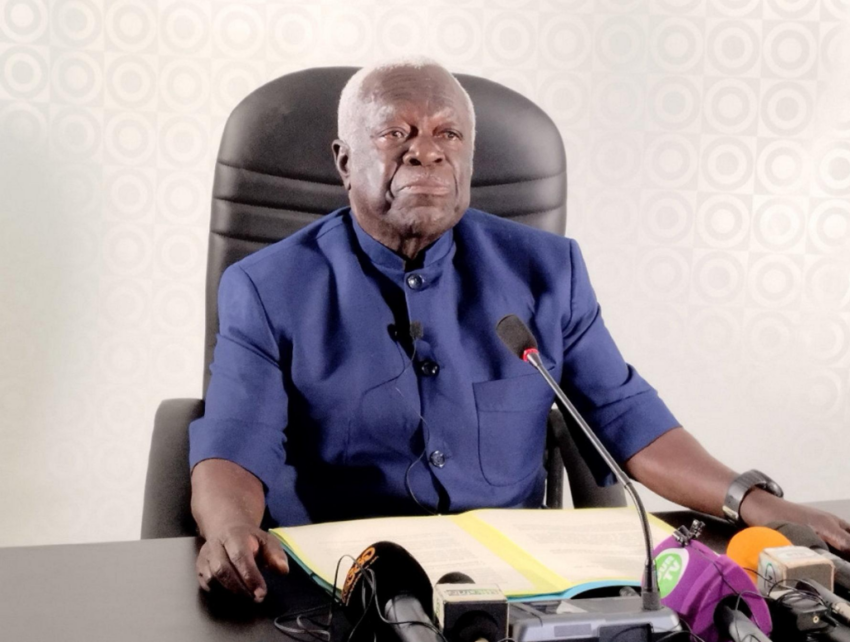
A once-powerful figure in Gabonese politics now faces the consequences of his actions after a youth football match ended in tragedy. Jean-Boniface Assélé, 87, a former police general and multiple-term minister under Omar Bongo, has been remanded in custody following the shooting of a 12-year-old boy during a match at Libreville’s Sibang stadium.
From Sibang stadium to prison: a high-profile fall from grace
The incident occurred on November 13, 2026, during a children’s football match at the Augustin-Monedan stadium in Libreville’s sixth arrondissement. According to prosecutors, Assélé arrived at the venue in a vehicle driven by his son, carrying a 16-gauge shotgun. After ordering the children to leave, he allegedly discharged his weapon, critically wounding Jason Merlin Midioko—known as Dylan—who sustained a serious gunshot wound to the abdomen.
Assélé reportedly left the scene before voluntarily surrendering to judicial police the following night. A preliminary investigation was launched to determine the exact circumstances of the shooting and the potential liability of those involved.
A national outcry over the fate of a child
The severity of Dylan’s injuries sparked widespread outrage across Gabon. The boy was rushed to the Jeanne-Ebori Mother-Child University Hospital in Libreville, where he underwent emergency surgery and was placed in intensive care. Medical reports indicated his condition stabilized, though a bullet fragment remained lodged in a delicate area, requiring ongoing medical supervision.
President Brice Clotaire Oligui Nguema visited Dylan in hospital, ensuring full coverage of his medical evacuation costs. The ministers of Social Affairs and Health also mobilized in support of the boy’s family, who have since become the focus of a social media movement demanding justice under the hashtag #JusticeForDylan.
When former power meets the law
The case has raised significant questions about accountability in Gabon, where the principle of equality before the law is being tested. Assélé’s detention marks a rare instance in which a former high-ranking official—once a police chief, parliamentarian, and leader of the Cercle des Libéraux Réformateurs—faces criminal prosecution.
On November 16, Assélé was presented before an investigative judge in Libreville and remanded to Gros-Bouquet Central Prison in Libreville. He now faces provisional charges of attempted murder and illegal firearm possession. The judge has ordered further inquiries to establish the facts, examine evidence, and determine the shooter’s intent.
While Assélé maintains his innocence, the case has exposed deep societal divisions over whether Gabon’s justice system can fairly prosecute those who once wielded unchecked authority.
Justice, politics, and public trust in the balance
The presidential visit to Dylan’s bedside carried a symbolic message: “Justice is the same for everyone,” President Oligui Nguema stated, echoing a sentiment shared by citizens demanding fairness. The Assélé family has since expressed regret over the incident and initiated steps to support Dylan’s medical care.
Yet questions linger: What motivated Assélé’s actions? Were there additional parties involved? And how will the judicial process ensure transparency while protecting the rights of all?
As the investigation unfolds, one truth remains clear: no individual, regardless of past stature, is above the law. Dylan’s recovery—and the pursuit of justice—will define not just his future, but the credibility of Gabon’s institutions in the eyes of its people.
The broader implications: does Gabon’s justice system treat all equally?
This case transcends a single incident. It has become a litmus test for Gabon’s legal system, forcing citizens and officials to confront longstanding concerns about preferential treatment for the politically connected. The hashtag #JusticeForDylan has amplified calls for systemic reform, with many arguing that accountability should apply equally to former ministers as it does to ordinary citizens.
For Dylan’s family, the road to recovery is arduous. For Assélé, the specter of a prison sentence hangs heavily. And for Gabon, the outcome of this case may well determine whether its justice system can reclaim public trust—or remain mired in perceptions of inequality.