Gabon’s president pays historic tribute in Yamoussoukro
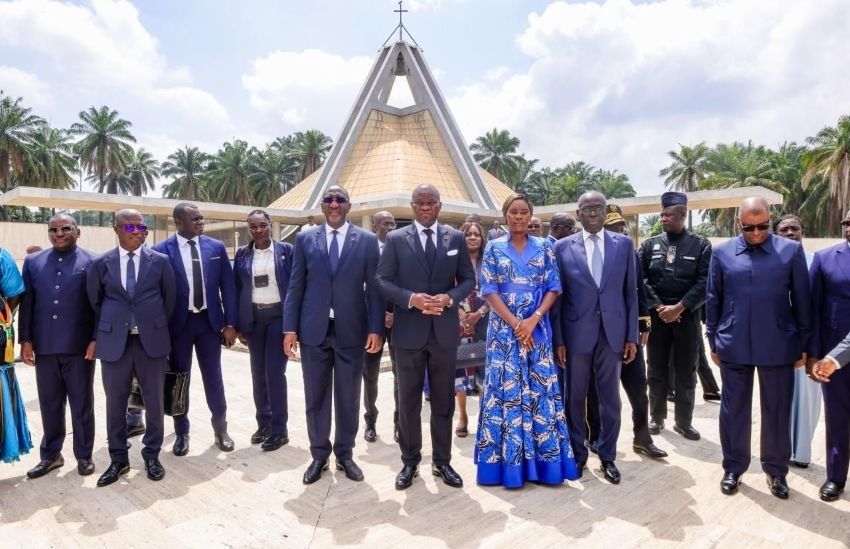
Libreville, August 6, 2026 – President Brice Clotaire Oligui Nguema’s visit to Yamoussoukro carried profound diplomatic significance, transcending the formalities of an official state call. By honoring the legacy of Félix Houphouët-Boigny at his final resting place and visiting the Basilica of Our Lady of Peace, Gabon’s leader underscored a commitment to shared African values: memory, peace, and enduring partnership.
The three-day visit, which began on August 5, saw the Gabonese delegation—led by the President and First Lady Zita Oligui Nguema—received by Ivorian authorities across political, administrative, and traditional spheres. This timing coincided with preparations for Côte d’Ivoire’s 66th independence anniversary celebrations, to which President Alassane Ouattara had personally invited Gabon.
Yamoussoukro was deliberately chosen for its symbolic weight. The city houses the mausoleum of Félix Houphouët-Boigny, Ivory Coast’s first president and a towering figure in African history. By placing a wreath at the site, Oligui Nguema paid tribute to a leader renowned for nation-building and reconciliation. The gesture also highlighted the deep historical and diplomatic ties binding Libreville and Abidjan—roots anchored in friendship, cooperation, and mutual solidarity.
Honoring a legacy that echoes across Africa
Speaking to traditional leaders in Yamoussoukro, the Gabonese President framed the visit as more than bilateral diplomacy. He emphasized how Houphouët-Boigny’s vision embodied a model of African governance: one that values long-term stability, preserves collective memory, and leverages peace as a foundation for progress. The message resonated as a call to African nations to reclaim their historical narratives while forging collaborative futures.
This diplomatic overture aligns with Gabon’s broader strategy to deepen continental partnerships. Oligui Nguema’s regional tour signals a clear intent to strengthen ties with key African partners, positioning Gabon as a proactive advocate for multilateral cooperation.
The President also expressed gratitude to Alassane Ouattara for the invitation to the August 7 national festivities. Gabon’s participation will reflect both institutional and cultural diversity, with high-ranking military officers trained in Côte d’Ivoire joining indigenous representatives from Gabon. This inclusion underscores the country’s rich ethnic mosaic in a celebration that unites African states and communities.
From memory to a shared vision of unity
The visit’s second defining moment unfolded at the Basilica of Our Lady of Peace, a monumental structure inspired by St. Peter’s Basilica in Rome. The Gabonese delegation toured the site before a moment of reflection. In the guestbook, Oligui Nguema inscribed a call for African unity, dialogue, and solidarity—values he framed as essential to building a stronger, more prosperous continent.
This deliberate choice of location and message reveals a nuanced diplomatic approach. It moves beyond transactional agreements to embrace symbolism, shared history, and cultural bridges as tools for continental cohesion. For both Gabon and Côte d’Ivoire, the relationship carries deep historical significance. Yet the true test lies in translating this legacy into tangible cooperation across economic, security, and cultural domains. The Yamoussoukro visit serves as a strategic signal of this intent.
By paying homage to Houphouët-Boigny and invoking the ideals of fraternity and solidarity from the Basilica’s hallowed grounds, Oligui Nguema delivered a message transcending Côte d’Ivoire’s national celebrations. The underlying theme is unambiguous: for Gabon, ties with Côte d’Ivoire are not relics of the past but foundations for a more ambitious, forward-looking African partnership.

Related Articles