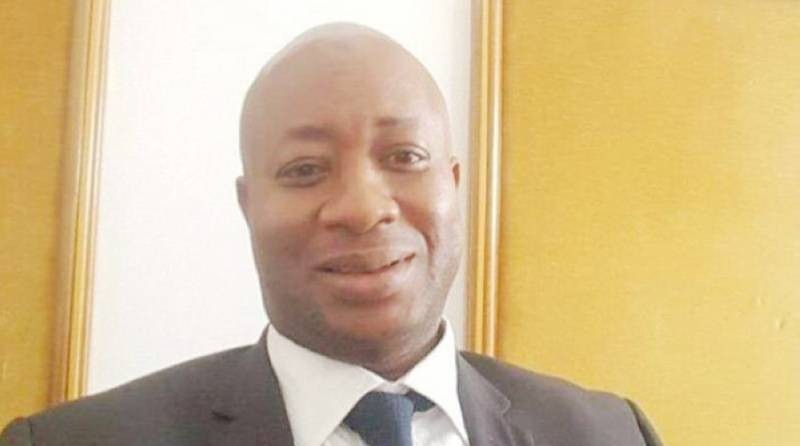
On the 66th anniversary of Côte d’Ivoire’s independence, Yaya Fofana, spokesperson for the Movement of Future Forces (MFA), delivered a powerful message to the nation’s youth. Addressing them directly, he urged a collective shift toward work, training, discipline, and rigor as the pillars of progress.
Honoring the legacy of Côte d’Ivoire’s founding fathers
In his address, Fofana paid tribute to the visionary leadership of President Félix Houphouët-Boigny and President Henri Konan Bédié, whose contributions laid the foundation for the nation’s sovereignty. He emphasized that independence, achieved on August 7, 1960, was not merely a historic milestone but a living commitment renewed daily through unity, loyalty, and collective effort.
Defense and security: The bedrock of peace and development
The MFA highlighted the critical role of Côte d’Ivoire’s Defense and Security Forces—including the military, gendarmerie, police, customs, and forestry services—in safeguarding the nation. Their sacrifices, particularly in the fight against terrorism in the north, were recognized as essential to maintaining stability and fostering development.
Yopougon: A symbol of national reconciliation
The decision to host the official ceremonies in Yopougon was framed as a symbolic gesture of unity, reinforcing the idea that Côte d’Ivoire’s regions—from Daloa to San-Pédro, and Korhogo to Odienné—are inextricably linked. The MFA stressed that the nation’s strength lies in its diversity, with every ethnic group—Baoulés, Dioulas, Bétés, Agnis, Guérés, Peulhs, and others—contributing to its indivisible identity.
From political independence to economic sovereignty
While 1960 marked the birth of Côte d’Ivoire’s political independence, Fofana argued that the true challenge of the 21st century is achieving economic, monetary, and industrial sovereignty. The MFA outlined ambitious goals, including 50% local processing of cocoa and 40% for cashews by 2030, alongside a national industrialization plan. Digital and media sovereignty were also underscored as priorities to ensure Côte d’Ivoire shapes its own narrative.
Social justice: Bridging the gap between growth and daily life
Though Côte d’Ivoire’s macroeconomic performance has been widely praised, the MFA cautioned that prosperity must be tangible for all citizens. Key demands included:
- Building 200,000 affordable homes by 2030;
- Creating 500,000 formal jobs for youth under 35 in the next five years;
- Strengthening the informal sector, which sustains eight out of ten Ivorians;
- Establishing a dedicated Ministry for Small and Medium Enterprises (SMEs).
Generational transmission and institutional reform
The MFA welcomed President Alassane Ouattara’s pledge to facilitate generational transition, calling for concrete actions such as opening leadership roles to younger cadres trained since 2011 and increasing women’s representation in decision-making. A reformed Electoral Commission, structured on the principle of three equal parts—administration, political parties, and civil society—was proposed to ensure peaceful elections.
The true spirit of Houphouëtism: Unity over division
Fofana reaffirmed that the essence of Houphouëtism lies in unity, dialogue, and forgiveness. He described Côte d’Ivoire’s ethnic groups—Malinkés, Sénoufos, Krobous, and others—as the five fingers of one hand, united in purpose and strength.
MFA’s role within the RHDP: Loyalty with a reformist edge
The Movement of Future Forces, a founding member of the Rally of Houphouëtists for Democracy and Peace (RHDP), emphasized its unwavering commitment to the party’s ideals while advocating for internal reforms. The MFA’s loyalty is rooted in conscience, shaped by the legacies of Houphouët-Boigny and Bédié, and carried forward with President Ouattara. Its demand for full reinstatement in the RHDP’s leadership structures reflects a quest for memory, coherence, and justice—values essential for the party’s long-term cohesion.
A call to action for youth, diaspora, and West Africa
The MFA’s message to Côte d’Ivoire’s youth was clear: reject passivity and embrace discipline, training, and hard work. For the diaspora, Fofana advocated for policies that deepen integration, including cross-border banking, tax incentives for productive investment, equitable access to public tenders, and political representation tailored to their contributions.
On the regional stage, Côte d’Ivoire was positioned as a bridge-builder, urging the ECOWAS to renew dialogue with Mali, Burkina Faso, and Niger. The MFA stressed that regional integration is not a diplomatic luxury but a necessity for economic and security survival.
A renewed oath for Côte d’Ivoire’s future
Concluding his address, Fofana invoked a solemn oath to the nation, reaffirming the sacrifices of fallen soldiers, the resilience of women, and the hopes of future generations. The MFA’s ultimate ambition, he declared, is to repay Côte d’Ivoire’s generosity by building a united republic, a thriving fraternity, and a shared future.
As Côte d’Ivoire celebrates its 66th year of independence, the call to action is resounding: work, discipline, and unity must guide the nation toward greater heights.