Libreville’s bay of pigs transformation: a bold urban renewal project begins
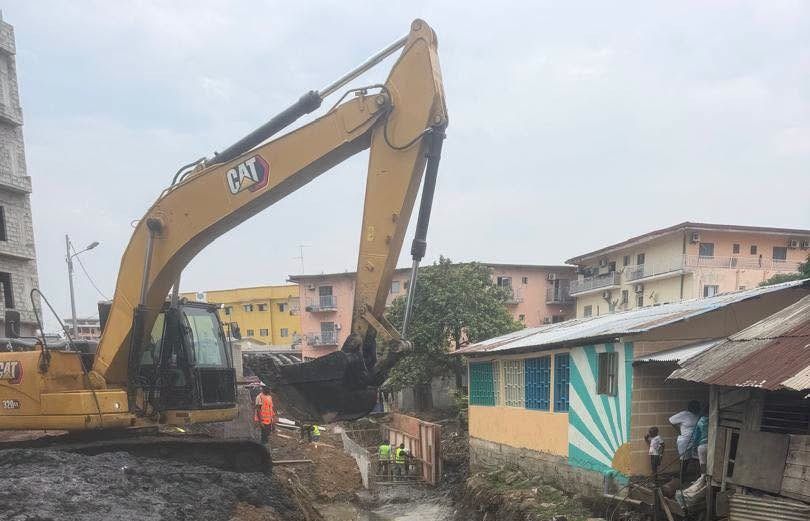
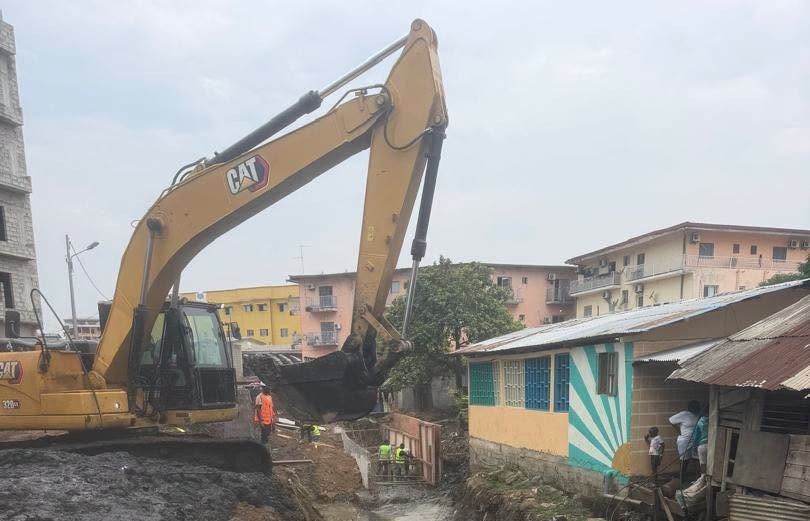
Libreville, June 25, 2026 — On June 26, Libreville will witness a pivotal moment in its urban evolution. After weeks of consultations and preparatory work, demolition operations are set to commence in the strategic Bay of Pigs area, located in the third arrondissement of Gabon’s capital.
The heavy machinery poised to roll in signifies far more than a road construction project. It marks one of the flagship initiatives in President Brice Clotaire Oligui Nguema’s urban modernization drive, aimed at fundamentally reshaping traffic flow, sanitation, and territorial integration across several Libreville neighborhoods.
The project, which encompasses Sipagel, the Léon Mba intersection, and the corridor running from the Gabon Energy and Water Company facilities to the Petit-Paris roundabout, embodies the government’s commitment to prioritizing foundational infrastructure to support urban growth. Yet it also confronts a challenge faced by every major African metropolis: how to modernize a city without destabilizing long-standing communities.
Unlocking a capital in transition
The Bay of Pigs occupies a critical position in Libreville’s spatial organization. Nestled at the heart of dense economic and human traffic flows, this area has long been a major congestion point linking Mont-Bouët market, the city center, Bessieux Boulevard, and several peripheral districts.
Government plans call for the creation of a new main thoroughfare supplemented by secondary roads to ease movement and strengthen connections between the Libreville University Teaching Hospital, Petit-Paris, the Léon Mba intersection, and surrounding zones.
During a June 23 site visit, Housing, Urban Planning, and Land Affairs Minister Mays Mouissi personally briefed residents on project objectives. Authorities emphasize that securing public land is an essential prerequisite before construction can begin in earnest under the contracted company.
Beyond traffic improvements, the initiative aims to tackle a recurring scourge affecting thousands of nearby residents each year: flooding. The program includes clearing existing drainage channels, rehabilitating degraded hydraulic structures, and installing new stormwater runoff systems.
For public authorities, this represents an opportunity to address two pressing urban challenges simultaneously: mobility and sanitation.
Navigating the human impact of large-scale urban renewal
As with any major development project, future benefits come with immediate consequences for those directly affected.
Many families have inhabited the targeted spaces for decades, while others rely on them for their daily livelihoods. The prospect of demolition naturally sparks questions, concerns, and expectations among residents.
Recent experiences across African cities show that the success of such ventures is measured not only by the quality of roads built or the modernity of new infrastructure. It also hinges on authorities’ ability to manage the human transition with care.
Issues surrounding compensation, potential relocations, protection of local economic activities, and social support become just as vital as the construction work itself.
Mindful of this reality, the ministry asserts it has prioritized dialogue with affected residents ahead of operations. The coming weeks will reveal how effectively this approach is implemented and whether public authorities can strike a balance between the public interest and protecting vulnerable populations.
A litmus test for urban modernization
Today, the Bay of Pigs stands as a symbol—a city that can no longer expand using outdated methods.
Faced with rapid population growth, fast-paced urbanization, and mounting environmental pressures, Libreville must adapt its infrastructure to a new reality. Chronic traffic jams, hindered emergency service access, sanitation failures, and the isolation of certain neighborhoods now hinder the capital’s economic progress.
This is precisely what the government seeks to correct through the initiative. Yet the project also serves as a critical political test, measuring the state’s capacity to implement ambitious urban reforms while preserving social cohesion. Because a modern city is built not only with concrete, roads, and drainage systems—it is built with the support of its people.
In the Bay of Pigs, Gabon is wagering a significant part of its modernization strategy. The first excavator scoops of earth will launch the works, but their lasting impact on daily life will ultimately determine whether this transformation delivers on its promise.