Accusations linking the United Arab Emirates to the funding of psychotropic drug factories in eastern Libya are reigniting tensions between Algiers and Abu Dhabi. While diplomats bicker over geopolitical fault lines, the real casualties could be Algeria’s most vulnerable: its young population, increasingly exposed to a flood of illicit substances crossing porous borders.
From whispers to war: psychotropics as a regional weapon
Recent claims by journalist Mehdi Ghezzar suggest that industrial-scale psychotropic production facilities in eastern Libya—territory under the sway of Khalifa Haftar’s forces—are allegedly bankrolled by foreign actors based in the UAE. Unlike typical street-level trafficking, these operations allegedly deploy heavy machinery, specialized personnel, and industrial-grade supply chains to churn out mass quantities of addictive drugs.
Ghezzar’s assertion—“These are UAE-owned factories.”—has thrust a shadowy trade into the spotlight, with alleged intentions to destabilize Algeria by flooding its streets with psychotropic substances. However, concrete, independently verified evidence tying Abu Dhabi to these operations remains elusive, leaving the accusation unproven.
Libya’s lawless east: where drugs are manufactured, not just smuggled
The fragility of Libya’s post-2011 governance has turned it into a magnet for transnational criminal networks. Fragmented control, unchecked borders, and fierce rivalries between armed factions have created an environment where illicit industries thrive. Recent court actions paint a chilling picture of production on Libyan soil:
- Qubbah’s verdict: In November 2026, a court in eastern Libya sentenced six individuals for producing Captagon pills destined for trafficking, handing down sentences of up to life in prison.
- Koufra’s bust: A month earlier, Haftar’s Libyan National Army intercepted over 1.3 million Captagon pills, exposing the scale of on-site manufacturing and regional distribution circuits.
These cases confirm that Libya is no longer merely a transit point—it has become a hotbed of psychotropic production, with direct consequences for neighboring Algeria.
Haftar’s alliances: the geopolitical shadow over Libya’s drug trade
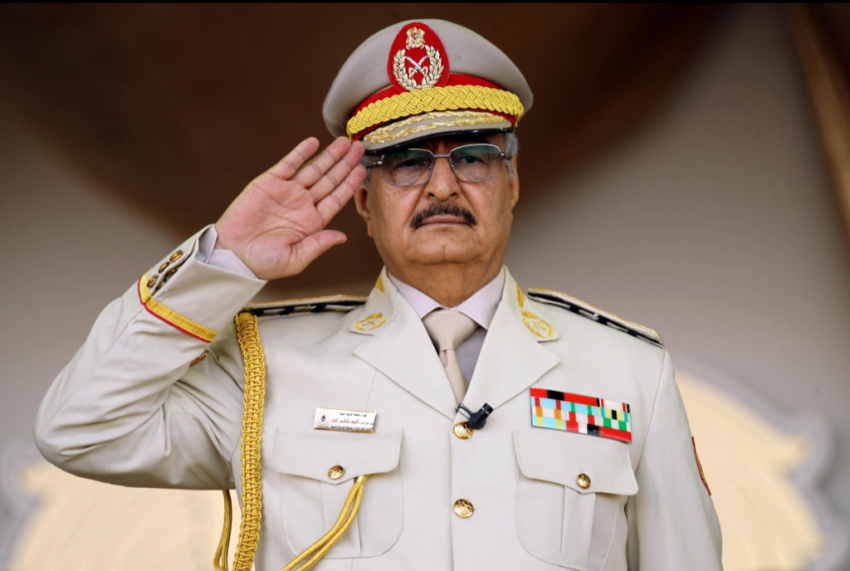
The UAE has long been a key backer of Khalifa Haftar, whose forces dominate eastern and southern Libya. While this alliance fuels regional proxy dynamics, no direct evidence has surfaced to prove Abu Dhabi’s financial involvement in the alleged psychotropic factories. To substantiate the accusations, investigators would need to:
- Identify the true owners of the industrial sites.
- Trace funding streams and equipment origins.
- Map distribution networks feeding Algerian markets.
- Uncover any political or military protections behind the operations.
Without such proof, the claims remain allegations—serious, but unconfirmed.
Algiers vs. Abu Dhabi: a diplomatic divorce with drug-fueled stakes
Relations between Algeria and the UAE have plummeted, culminating in the breaking of diplomatic ties in late 2026 over divergent regional alliances and security policies. In this climate, allegations of psychotropic trafficking backed by foreign states resonate as deliberate provocations rather than idle rumors.
President Abdelmadjid Tebboune has framed the drug trade as an outright “war on Algeria’s youth.” Addressing magistrates in 2026, he warned that Algeria would pursue the sources of these substances under its right to self-defense. Yet, even his government has not formally designated the UAE as the architect of this crisis.
Beyond borders: psychotropics poised to ravage Algeria’s social fabric
The rise of Libyan-produced psychotropics isn’t just a security issue—it’s a public health catastrophe in the making. Traffickers exploit poverty, unemployment, and youth disillusionment, turning addiction into a scourge that erodes communities from within. The crisis demands more than border crackdowns; it calls for:
- Cross-border judicial cooperation to dismantle trafficking rings.
- Financial monitoring to sever funding pipelines.
- Stricter controls on chemical precursors used in drug synthesis.
- Prevention programs and rehabilitation centers to protect vulnerable youth.
Who’s really calling the shots? uncovering the hidden network
The core question lingers: Who funds the psychotropic factories in eastern Libya, and what are their true goals? To answer it, investigators must:
- Examine the ownership structures of industrial sites.
- Analyze financial trails leading to foreign investors.
- Assess the true beneficiaries of these operations.
- Determine if production is a commercial venture or a state-backed strategy to destabilize Algeria.
Absent irrefutable proof, the narrative remains speculative. Yet the geopolitical fallout of unproven accusations could further strain North Africa’s fragile security landscape.
Libya’s drug economy: a regional powder keg
If future investigations reveal state-level involvement in financing Libyan psychotropic labs aimed at undermining Algeria, the consequences would ripple across the Maghreb. Diplomats would face impossible choices—condemning allies while confronting a borderless war on drugs that threatens entire generations.
For now, the only certainties are the factories in eastern Libya and the pills they produce. Everything else—financiers, motives, and masterminds—remains shrouded in uncertainty.