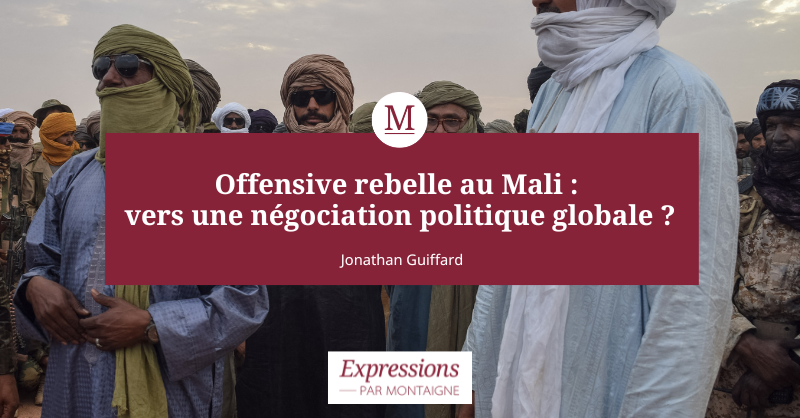
The military junta led by Assimi Goïta in Mali, backed by Russian forces, faces unprecedented pressure following a coordinated assault on April 25, 2026, by jihadists from the Jama’at Nusrat al-Islam wal-Muslimin (JNIM) and separatists from the Azawad Liberation Front (FLA). While Bamako scrambles to respond, the offensive has reignited fears of a territorial split reminiscent of the 2012 crisis—but with critical differences in strategy and alliances.
An unprecedented assault reshapes Mali’s security landscape
On April 25, 2026, rebel and jihadist forces launched a multi-pronged attack targeting key cities across Mali, including Bamako, Kidal, Gao, Sévaré, and Mopti. This marks the first time since 2012 that JNIM and FLA have executed a full-scale, joint offensive, signaling a shift from sporadic coordination to a cohesive partnership. Strategic sites in Bamako, such as the Kati military barracks and the airport, were directly targeted, while northern cities like Kidal, Tessalit, and Anéfis fell under rebel control.
The assault has delivered a severe blow to Mali’s military leadership. Defense Minister General Sadio Camara was killed, and key figures like General Modibo Koné, head of the National Security Agency, were injured. President Assimi Goïta was reportedly evacuated to the Turkish embassy before resurfacing publicly with Russian officials. These events have exposed deep fractures within the junta, raising questions about its stability and cohesion.
Key differences from the 2012 crisis
- Strategic communication and negotiation tactics: Unlike in 2012, JNIM and FLA have avoided high-profile public appearances, with only high-ranking JNIM member Sidan Ag Hitta spotted in Tessalit. The groups have prioritized negotiation and safe passage for captured soldiers over violent confrontations.
- Targeted disengagement of Russian forces: Reports indicate that negotiations facilitated by Algeria allowed Russian mercenaries to withdraw from key northern bases without resistance, echoing tactics observed in Syria.
- Simultaneous pressure on multiple fronts: The offensive has stretched Malian and Russian forces thin by diverting attention to Bamako while encircling Gao and Tombouctou, creating a pincer movement reminiscent of 2012 but with greater precision.
Military and political fallout: a junta under siege
The Malian government, already weakened by internal divisions and a failing partnership with Russia, now confronts a dual crisis—military and political. The junta’s inability to regain control has intensified calls from civil society for negotiations, including from prominent figures like politician Oumar Mariko and former minister Mamadou Ismaïla Konaté. Meanwhile, the encirclement of Bamako, with supply convoys targeted and critical infrastructure under threat, has forced the junta into a defensive posture.
The situation has also emboldened the Islamic State’s Sahel Province (EIWS), which launched an assault on Ménaka but was repelled by Russian-Malian forces. While not part of the JNIM-FLA offensive, EIWS remains a persistent threat in northeastern Mali, complicating the junta’s efforts to stabilize the region.
Prospects: what lies ahead for Mali?
Military analysts predict that JNIM and FLA will likely secure Gao and Tombouctou if Russian forces withdraw, effectively partitioning Mali’s northern region. The loss of these cities could trigger mass desertions among Malian troops, further destabilizing the junta. However, the use of Turkish-made TB2 drones by Mali and its allies may temporarily slow the rebel advance.
In the short term, the rebels’ strategy appears to focus on strangulating Bamako while consolidating control over the north. Unlike 2012, JNIM’s approach has softened, with an emphasis on localized governance and gradual imposition of Islamic law rather than outright violence. This shift may reduce the likelihood of a full-scale takeover but risks entrenching jihadist influence across the Sahel.
Long-term risks and regional implications
The establishment of a jihadist proto-state in northern Mali would pose significant challenges for regional security. European and African partners may need to adapt their strategies, as the precedent set by past interventions (e.g., Barkhane) no longer applies. Algeria and Mauritania could play pivotal roles in brokering negotiations, given their influence with both JNIM and FLA. However, the jihadists’ continued allegiance to Al-Qaeda complicates efforts to normalize their status internationally.
For Mali’s neighbors, the crisis underscores the fragility of the Alliance of Sahel States (AES) and the limitations of external military support. Burkina Faso and Niger, themselves embroiled in insurgencies, can offer only limited assistance, while Senegal and Côte d’Ivoire are unlikely to intervene militarily. The most plausible path forward remains a negotiated settlement, though the junta’s reluctance to cede power complicates this option.
Conclusion: a turning point for Mali and the Sahel
The April 25 offensive has exposed the junta’s vulnerabilities and accelerated the fragmentation of Mali. With Russian support waning and rebel forces tightening their grip, the likelihood of a negotiated political resolution grows. However, the rise of a jihadist proto-state introduces new risks, demanding a coordinated response from regional and international actors to prevent further destabilization.