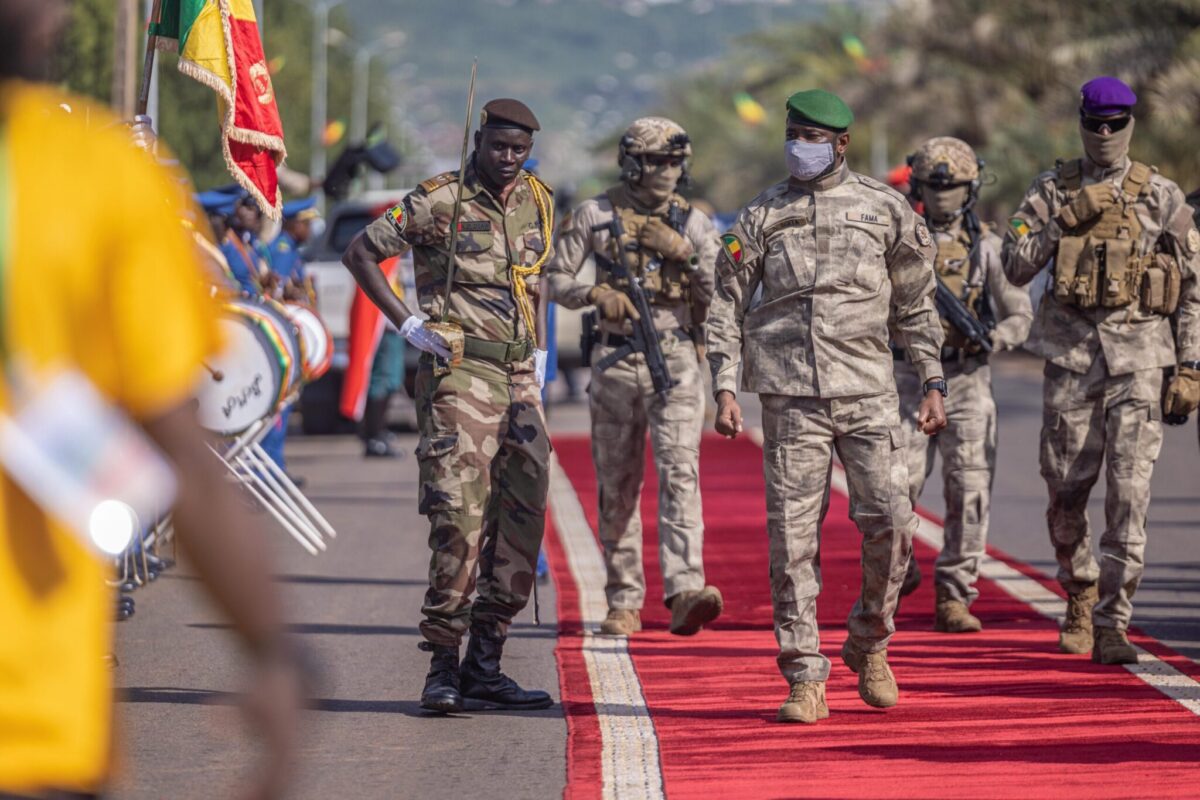
Bamako’s declaration of restored military sovereignty following the withdrawal of French forces and the progressive abandonment of Western security frameworks has been framed by authorities as a historic triumph for Malian self-determination. The narrative celebrates the nation’s rejection of foreign tutelage and reassertion of territorial control. Yet beneath the rhetoric lies a deeper transformation—one that reconfigures power networks, economic circuits, and governance itself.
From foreign dependence to militarized rule
The Mali government’s claim of regained autonomy masks a critical shift: the transfer of security reliance from traditional Western partners to Africa Corps, a mercenary force now tasked with counterterrorism operations and regime protection. This transition has not ended dependence—it has merely reoriented it.
Over time, conflict has evolved from a challenge to be resolved into the very foundation of political life in Mali. The military now occupies a central role in state administration, regime legitimacy, and domestic economic flows. Since the 2022 coup, soldiers control every lever of governance. War is no longer just a crisis to manage—it has become the architecture of the state.
The departure of French troops dramatically altered regional power dynamics. For many Malians, this rupture symbolized liberation after years of perceived ineffective foreign intervention. The transitional authorities seized on nationalist sentiment to bolster their legitimacy, portraying the break with Paris as a sovereign choice.
Yet symbolic sovereignty does not translate into material strength. Armed groups remain active across multiple regions, violence persists, and the state’s logistical capacities remain critically weak. Bamako now faces encirclement by jihadist factions. The urgent question is no longer foreign presence, but whether Mali can truly stabilize its territory.
New alliances, old dependencies
As Western influence recedes, a new security partner has gained prominence: Russia. Through direct and indirect channels, Moscow has become a key player in Sahelian military restructuring—bringing both hope and controversy.
International discourse often reduces Mali’s situation to a geopolitical rivalry between France and Russia. In reality, Bamako’s calculus is more pragmatic. The regime seeks partners who can sustain its political survival without imposing Western-style diplomatic constraints. The result? An accelerating militarization of Mali’s political economy.
As insecurity deepens, the government justifies tighter decision-making, reduced political pluralism, and delayed democratic transitions—all framed as necessary for national security. War ceases to be a context and becomes a governing resource. The longer the crisis lasts, the stronger the military’s grip on power.
The Sahel Alliance and its fragile foundations
The emergence of the Alliance of Sahel States (AES)—comprising Mali, Burkina Faso, and Niger—further entrenches this logic. Together, they champion “sovereign security,” critique former colonial powers, and elevate military institutions to central governance roles. Yet this alliance rests on shaky ground: weakened economies, intense social tensions, and a volatile regional environment. The pursuit of strategic autonomy occurs even as these nations remain financially and militarily vulnerable.
Mali’s experience reflects a broader paradox of contemporary Sahel governance. Breaking with Western security frameworks delivers real symbolic gains in sovereignty. But this sovereignty remains incomplete as long as the state’s administrative, economic, and security structures continue to revolve around emergency military responses. In this system, war becomes a permanent infrastructure of the state.
Within this framework, peace itself becomes a political risk. A genuine stabilization would force the reopening of long-postponed issues: economic redistribution, corruption, local governance, civilian participation in power, restoration of pluralism, and institutional rebuilding.
Mali’s crisis is therefore not merely a clash of foreign powers. It raises a more unsettling question: How can a state be rebuilt when war economies increasingly define the functioning of power?
For Bamako, the challenge is no longer just military. It is political, social, and structural. Until sovereignty is redefined beyond military capacity alone, Mali risks replacing one form of external dependence with another: a state permanently organized around war, now allied with Russian mercenaries.
Mourad Ighil