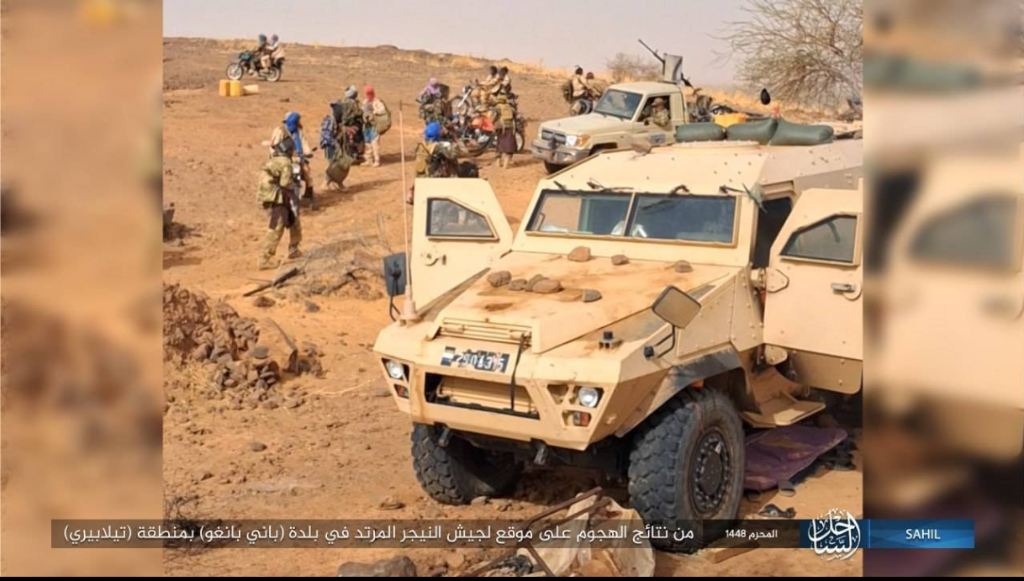
June 24, 2026, marked a dark chapter in Niger’s recent history as the Islamic State in the Sahel (IS Sahel) launched two coordinated, high-impact attacks on military positions in Inates and Banibangou. The assaults, claimed by the group, left at least 80 soldiers dead, over 30 vehicles destroyed, and additional military hardware captured. Beyond the staggering human toll, the offensive has sent shockwaves through the local economy and communities along the volatile Niger–Mali–Burkina Faso border.
The anatomy of a coordinated strike
Timing was everything in this brazen assault. The simultaneous attacks unfolded during a window where military movements are hardest to predict, catching Nigerien defense forces off guard. In Inates, a hotspot long plagued by intense clashes in the so-called “tri-border” zone, the assault was particularly devastating. IS Sahel reported killing at least 70 soldiers, torching 22 military vehicles, and seizing 24 more. Hours later, a second wave struck Banibangou, where 10 soldiers perished, 16 vehicles were destroyed, and six were captured.
Military analysts warn that the twin offensives expose persistent vulnerabilities in regional security. Despite joint counter-terrorism operations, the group retains alarming mobility and operational freedom, exploiting the porous borders to strike with impunity.
Economic paralysis: markets fall silent and roads vanish
The repercussions of the attacks extend far beyond the battlefield. The Tillabéri region, where both towns lie, is a lifeline for local trade and supply chains. With roads cut off and markets emptied, the economic fallout is severe. Within 48 hours, staple food prices doubled as commercial traffic ground to a halt.
The damage unfolds across three critical fronts:
- Collapse of weekly markets: Once bustling hubs for livestock and grain exchange, these markets now stand deserted as traders and farmers fear repeat violence.
- Road blockades: The destruction or seizure of nearly 70 vehicles—military and civilian—has severed vital transport links, deepening the isolation of these communities.
- Agricultural abandonment: With the rainy season approaching, farmers and herders are reluctant to venture into fields, threatening long-term food security.
Grief and defiance in the face of terror
The shock waves of the attacks have rippled across Niamey and Tillabéri. Families of the fallen demand accountability, while survivors in Banibangou recount scenes of utter devastation. The IS Sahel strategy goes beyond military targets—it aims to erode public morale, forcing civilians into submission or forced displacement.
Yet amid the devastation, signs of resilience emerge. Blood donation drives surge in Niamey hospitals to aid the wounded, and civil society leaders urge the government not to abandon these borderlands to urban-centric policies.
A crossroads for Niger’s security strategy
The Inates and Banibangou attacks force a reckoning over early warning systems and surveillance gaps. For the ruling junta and military command, the setback demands swift tactical adjustments. But beyond firepower, the path forward hinges on restoring economic lifelines. Without secure trade routes and reopened markets, military presence alone cannot stabilize the region.
The coming weeks will test Niger’s dual challenge: launching decisive counter-offensives to push back the threat while injecting urgent economic relief into communities on the brink of collapse.