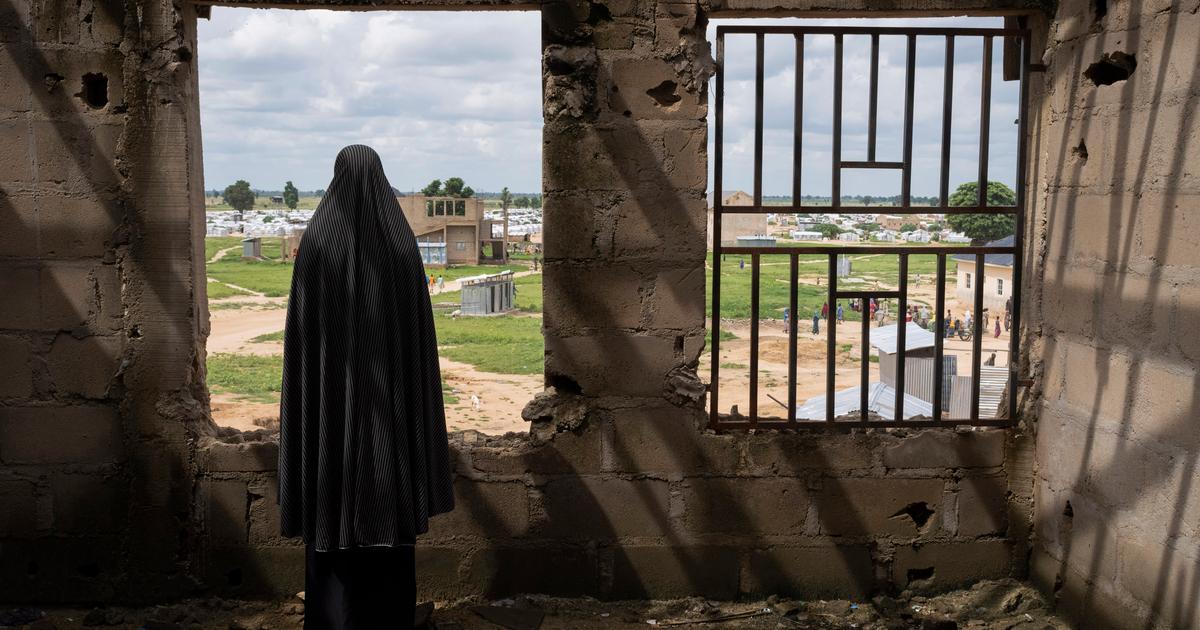

Aisha, Juliana, and Hauwa — three names representing countless untold stories. While mass abductions by the jihadist group Boko Haram often dominate international headlines, the individual experiences of these Nigerian women frequently remain unheard. This in-depth report sheds light on their harrowing journeys, giving voice to those who have endured unimaginable suffering.
One Saturday evening in April 2014, Aisha was preparing a stew, her children’s favorite meal, when Boko Haram insurgents launched a brutal assault on her village of Gamboru Ngala in Borno State, northeastern Nigeria.
She had no opportunity to escape. Her brother was murdered before her eyes. Aisha, like many other women from Gamboru Ngala, was taken captive. She found herself in a camp alongside numerous other prisoners, eventually led to a tent. “A tall, bearded man entered. He informed her he was a Boko Haram commander and that she would now be his wife. ‘Every night, they would come for me in the room, and he would rape me,’ Aisha recounts.”
the painful label: “boko haram wife”
After two years of captivity, enduring multiple forced marriages, rapes, and three forced pregnancies, she managed to escape during an offensive by the Nigerian army.
Juliana also found freedom two years after her abduction, aided by an older woman. She was only 15 when Boko Haram militants seized her and her mother in Adamawa State, located in northeastern Nigeria.
“Before her abduction, her aspirations included completing secondary school and attending university to become a computer engineer.”
Hauwa’s ordeal was the longest, spanning a decade in the insurgents’ grasp. During this time, she was subjected to three forced marriages and gave birth to four children. Upon her return home, she felt “defiled” and, more profoundly, “stigmatized,” frequently labeled a “Boko Haram wife.” Her children, too, faced severe prejudice, “treated as outcasts and denied the freedom to interact with other children.”
This comprehensive report also delves into the pervasive discrimination faced by these former captives and highlights a reintegration initiative designed to support them. Though freed from their aggressors, many find themselves ostracized by their own communities.
The analysis further explores how transitional justice can play a crucial role, not only in combating impunity for violence against women but also in addressing the lasting consequences of gender-based violence experienced during the conflict. This approach offers a vital pathway to help these women, who have multifaceted needs, overcome their profound traumas.
“People congratulate me on being free, but a part of my heart remains trapped in that forest. I am haunted by the thought of the women we left behind,” Juliana shares, expressing her lingering pain.