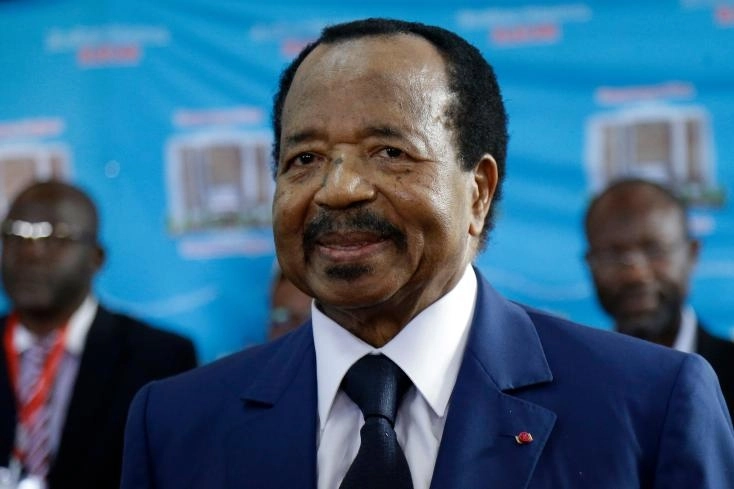
Cameroon – Following nearly two months out of the public eye, government officials have broken their silence. Authorities confirm President Paul Biya remains alive and is set to return soon, amid growing concerns over his health and whereabouts.
The Cameroonian government addressed the prolonged absence of President Paul Biya for the first time. The Head of State has not been seen in public since June 7, sparking widespread speculation and public concern. On Sunday, August 2, the Minister of Communication and Government Spokesperson, René Emmanuel Sadi, addressed the nation on national radio to dispel rumors.
In a firm statement, the government spokesperson dismissed claims of a power vacuum, emphasizing that only the Constitutional Council can legally declare such a situation. “The Constitutional Council has not declared a vacancy at the head of the State. President Paul Biya is alive. He has not resigned,” he declared.
René Emmanuel Sadi’s remarks also aimed to counter repeated demands from opposition figures, who have called for official recognition of a power vacuum due to the President’s extended absence. When questioned about the President’s current location and return date, the spokesperson remained cautious but hinted at an imminent return. “I cannot give you an exact date for President Paul Biya’s return. Even if I knew, it is not for me to announce it. But I can assure you he will be back very soon,” he stated.
At 93 years old, Paul Biya has led Cameroon since 1982, making him the world’s longest-serving current leader. His last public appearance was on June 7, when he left Yaoundé for what was officially described as a “short private stay in Europe” alongside his wife, Chantal Biya. Since then, no public appearances have been recorded—a rarity since he assumed office.
Despite his absence, the Cameroonian presidency has continued to issue official decrees in the President’s name. On July 22, several decrees bearing the mention “Yaoundé” as the place of signature were made public, further fueling online debates about their authenticity.
These developments have intensified discussions on social media, with some internet users questioning the legitimacy of the documents and reinforcing speculation about the President’s health and location.