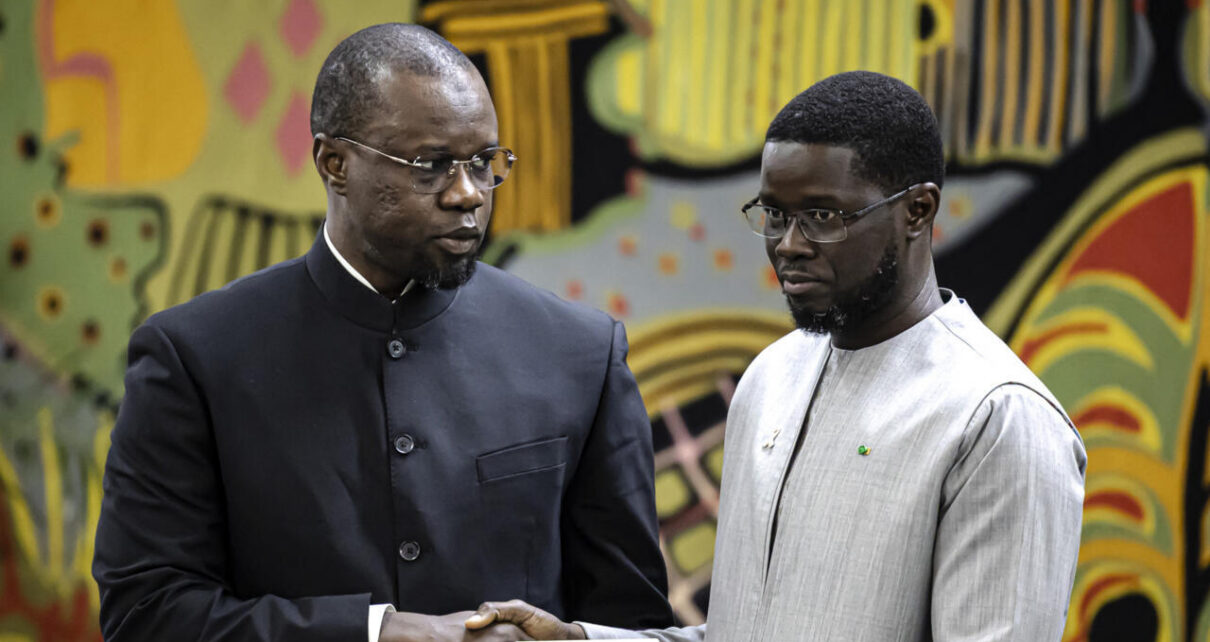
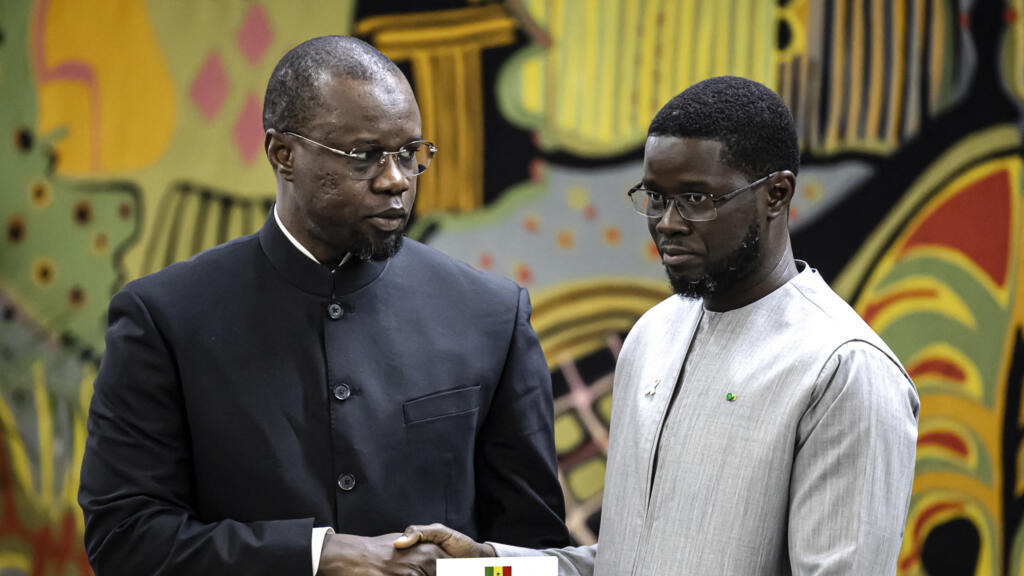
A little over two years after their historic alliance, President Bassirou Diomaye Faye has abruptly removed Ousmane Sonko from the Prime Minister’s office. The move has plunged Senegal into a complex political transition, with Sonko now presiding over the National Assembly and leading the ruling Pastef party—though notably absent from the government. What led to this unprecedented break? Could tensions between the two leaders derail Senegal’s priorities?
Key voices in the debate
- Abdoulaye Tine, Senior Advisor and Spokesperson for the Presidency.
- Amadou Ba, former Minister of Culture, Member of Parliament, and National Secretary in charge of Communications for the Pastef.
- Babacar Ndiaye, Political Analyst and Research Director at the Wathi think tank.
How did Senegal reach this crossroads?
In April 2024, the political landscape of Senegal was reshaped when Bassirou Diomaye Faye assumed the presidency. His rise was propelled by a groundswell of popular support, rooted in promises of transparency and systemic change. Ousmane Sonko, the charismatic opposition leader and founder of the Pastef party, became Prime Minister—a role he held until this week. Together, they embodied a rare moment of unity in a nation often divided by party politics.
Yet, the honeymoon phase proved short-lived. Tensions simmered beneath the surface as policy differences and strategic disagreements began to surface. The final rupture came when President Faye announced a new government without Sonko or any members of his party. The exclusion of Pastef from the executive branch was met with swift and public backlash. Sonko, now elevated to the presidency of the National Assembly, remains a dominant force within the party, which holds a majority in Parliament but is locked out of governance.
What does the future hold for Senegal?
Questions abound about the feasibility of a stable cohabitation between the two leaders. The political climate in Dakar is charged, with citizens and analysts alike questioning whether this rift will overshadow the pressing needs of the nation. From economic recovery to social cohesion, the priorities of the Senegalese people are hanging in the balance.
The coming weeks will be critical. Will President Faye and Assembly President Sonko find a path forward, or will their rivalry deepen the fractures in the country’s political fabric? One thing is certain: the decisions made in the halls of power will resonate far beyond the capital.
What happens next?
The political landscape in Senegal remains fluid. With Sonko’s continued influence within the Pastef and his new role in the Assembly, the potential for legislative gridlock looms large. Meanwhile, the government must navigate a delicate balance—addressing public expectations while managing internal party dynamics. For the people of Senegal, the hope is that leadership will prioritize national unity over personal ambition.