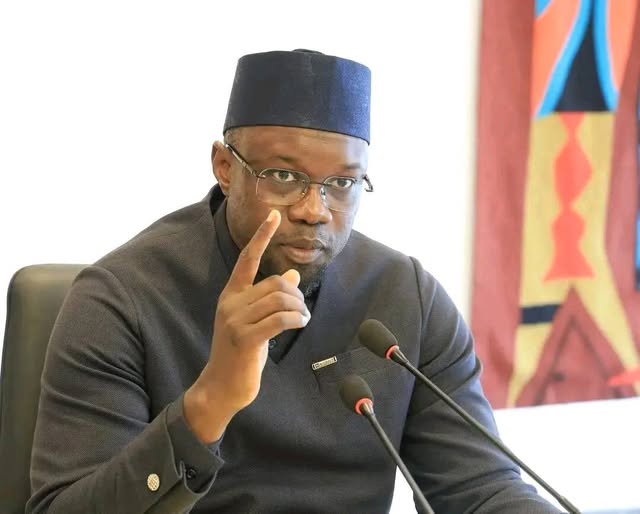
Dakar’s latest cabinet meeting took a decisive turn as Prime Minister Ousmane Sonko called for urgent action to break through the bottlenecks plaguing Senegal’s public infrastructure pipeline. Speaking during the interministerial council on infrastructure development, he stressed the need to remove financial, administrative and technical roadblocks that continue to delay critical national projects.
Breaking the deadlock on maritime and port infrastructure
The head of government singled out Senegal’s maritime sector, urging the Minister of Fisheries and Maritime Economy to fast-track projects that will enhance operational efficiency. He highlighted the importance of leveraging public-private partnerships to accelerate the delivery of key facilities such as the Foundiougne-Ndakhonga port, the Ndangane Sambou fishing quay, the upgraded Soumbédioune landing site and the processing hubs in Rufisque. Additional focus was placed on the operational readiness of the maritime agency’s dredging fleet across Kaolack and Fatick.
62 stalled projects demand immediate attention
A comprehensive audit has identified 62 infrastructure projects currently at a standstill. Among the most pressing are the Sine-Saloum University El Hadj Ibrahima Niass, the network of digital open spaces, regional airports in Saint-Louis, Matam and Kolda, the container terminal at Ndayane port, cold storage units and the memorial to the Le Joola disaster. The stalled reconstruction of the Aristide-Le-Dantec hospital in Dakar also remains a top priority.
To ensure these projects resume without delay, Sonko announced the creation of a dedicated monitoring committee. This body will oversee financial releases, streamline administrative procedures and address legal hurdles, guaranteeing that each project meets the nation’s high standards for quality and cost-efficiency.
Integrating utilities for sustainable development
Beyond construction timelines, the Prime Minister emphasized the need to embed water, electricity and telecom networks into every public infrastructure plan. He tasked ministers with ensuring robust technical equipment, sustainable operational models and long-term maintenance strategies are in place from day one.
Housing youth and boosting agro-industry
Youth and citizenship centers under construction in Tivaouane, Mbour, Linguère, Ranérou, Bambey, Diourbel, Kaolack and Tambacounda have been given a firm deadline: full equipment and operational readiness by November 30, 2026. The interministerial council also reviewed progress on the Naatangué village farms and agro-industrial parks in Mpal, Adéane, Dioulacolon and Mbellacadiao. Sonko called for collaborative public-private models to ensure these ventures are both economically viable and socially impactful.
Unlocking value through innovative financing
The Prime Minister explored multiple avenues to monetize public assets, including long-term leases, emphyteutic leases and public-private partnerships designed to attract fresh investment. The discussion extended to national stadiums, sports facilities, national parks, nature reserves and Senegal’s diplomatic real estate abroad, all targeted for value optimization.
In closing, Sonko urged government agencies to propose mechanisms for recycling and enhancing the value of state-owned real estate and land, including military assets, ensuring every asset serves the national interest effectively.