SENEGAL GOVERNMENT
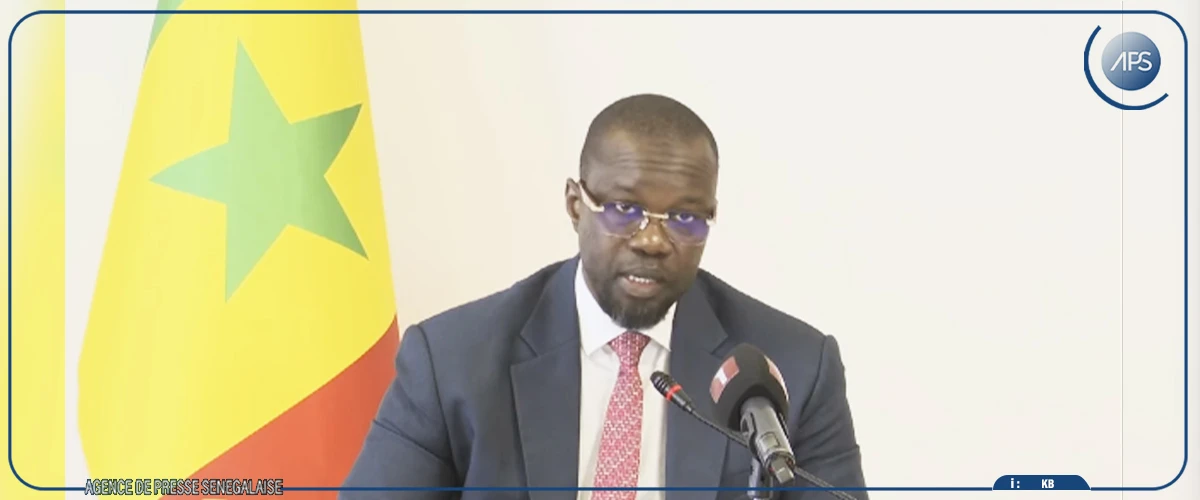
Dakar, May 21 — Prime Minister Ousmane Sonko has issued a firm directive to cabinet ministers to prioritize the completion and operationalization of ongoing infrastructure projects within their respective sectors. The call came during a high-level interministerial council meeting focused on infrastructure development.
Maritime and port infrastructure take center stage
Sonko specifically emphasized maritime and port projects, urging the Minister of Fisheries and Maritime Economy to expedite the operational readiness of key facilities through strategic public-private partnerships. Among the critical projects highlighted are the Foundiougne-Ndakhonga port, the Ndangane Sambou fishing quay in central Senegal, the upgraded Soumbédioune landing site, and processing facilities in Rufisque. Additionally, the Prime Minister called attention to the dredging equipment operated by the National Maritime Affairs Agency across Kaolack and Fatick regions.
62 stalled projects identified for urgent resolution
The government has earmarked 62 infrastructure projects currently facing delays, including the El Hâdj Ibrahima Niass University of Sine-Saloum, open digital spaces, regional airports in Saint-Louis, Matam, and Kolda, the Nadayane container terminal, and cold storage facilities. The reconstruction of Dakar’s Aristide Le Dantec Hospital also remains on the list of stalled initiatives.
Stringent quality and cost controls
Sonko underscored the importance of adhering to strict quality and cost benchmarks in finalizing these projects. A dedicated interministerial committee will be tasked with addressing financial, administrative, and legal hurdles to unblock and complete the delayed initiatives while ensuring compliance with national standards.
The Prime Minister also raised concerns about the technical integration of water, electricity, and telecommunications networks in these infrastructure projects. He stressed the need for proper planning to address these critical technical requirements, including adequate equipment, sustainable operational models, and long-term maintenance strategies.
Youth and citizenship centers face 2026 deadline
Sonko directed the Ministries of Youth, Finance and Budget, and Territorial Communities to accelerate the completion and equipping of youth and citizenship centers under construction in Tivaouane, Mbour, Linguère, Ranérou, Bambey, Diourbel, Kaolack, and Tambacounda. These facilities are slated for operationalization by November 30, 2026, at the latest.
Agricultural and agro-industrial initiatives prioritized
The interministerial meeting also addressed the progress of 11 Naatangué village farms under construction in Fatick, Kaolack, Louga, Thiès, and Tambacounda, alongside agro-parks in Mpal, Adéane, Dioulacolon, and Mbellacadiao. Sonko called on the Ministries of Agriculture, Industry, Finance, and Budget, along with local authorities, to develop sustainable public-private partnership models tailored to community needs, ensuring these facilities are operationalized promptly.
He further urged ministries to explore innovative valuation strategies for assets such as youth centers, digital open spaces, women’s facilities, and agro-parks. Potential approaches include long-term leases, concessions, rehabilitation, or administrative reallocation, all designed to attract private investment and optimize resource utilization.
Sports and environmental infrastructure not overlooked
Regarding national stadiums and sports infrastructure, Sonko recommended exploring public-private partnerships to ensure their efficient operation. He extended similar guidance to ministries overseeing national parks (Niokolo-Koba, Hann, Saloum Delta, Djoudj), urban reserves like Technopole and Lac Rose, and other natural sites, advocating for mechanisms to enhance their value and sustainability.
Diplomatic and public assets targeted for optimization
The Prime Minister also tasked the Ministry of African Integration, Foreign Affairs, and Senegalese Abroad with devising a strategy to leverage or repurpose Senegalese diplomatic and consular properties abroad, aligning these efforts with national interests and host country regulations. An interministerial meeting will soon convene to formalize a national doctrine for asset valorization.
Other public assets, including postal properties, railway and airport infrastructure, highways, public universities, hospitals, and military holdings, were also discussed. Sonko urged relevant ministries and public entities to identify and implement optimal strategies—whether through recycling, valorization, or private sector involvement—to maximize the utility of these assets.