
Tensions have reached a breaking point in Senegal as a fresh dispute erupts over the management of Bassirou Diomaye Faye‘s inherited assets, pitting the nation’s top leadership against each other.
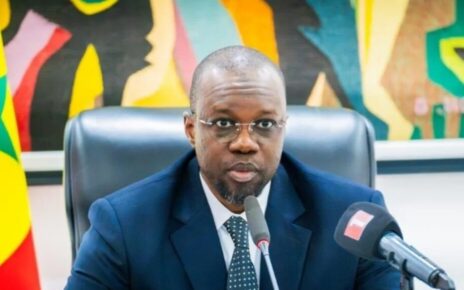
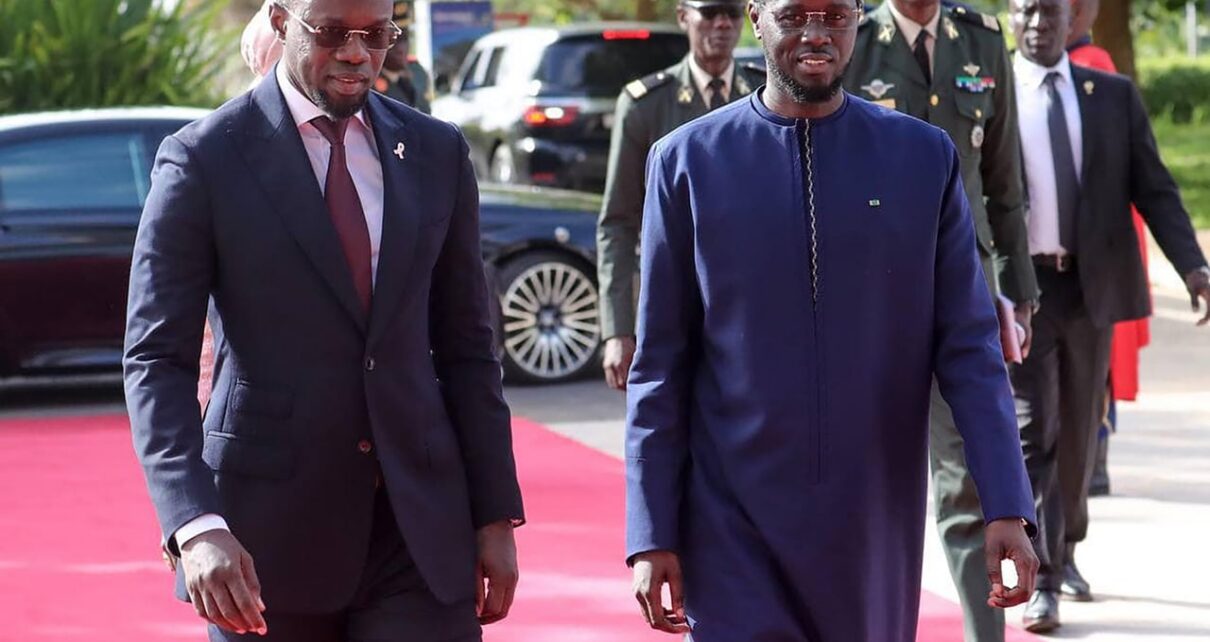
At the center of this political storm is the question of who controls the late president’s estate—a matter now dragging the country’s highest authorities into a high-stakes confrontation. The controversy has exposed deep divisions within the administration, with Ousmane Sonko, the Prime Minister, and Bassirou Diomaye Faye, the Head of State, locked in a power struggle that threatens to destabilize the government.
How the conflict over Bassirou Diomaye Faye’s heritage began
The origins of this clash trace back to conflicting interpretations of legal and traditional norms governing presidential inheritances in Senegal. With no clear precedent under the current constitution, both leaders have staked competing claims over the assets left behind by the former president. The situation has become even more complex due to the absence of a formalized succession plan, leaving room for multiple interpretations of ownership and authority.
Analysts suggest that the lack of transparency in asset declarations has further fueled the dispute, with rumors circulating about undeclared properties and financial holdings tied to the late president. These unconfirmed reports have intensified public skepticism and added pressure on both sides to clarify their positions.
Key figures and their stakes in the inheritance battle
The dispute has thrust two of Senegal’s most influential figures into the spotlight. Bassirou Diomaye Faye, as the sitting president, is asserting his right to oversee the estate as part of his constitutional duties. Meanwhile, Ousmane Sonko, as Prime Minister, argues that the government must intervene to ensure fair and equitable distribution of the assets in the national interest.
This power struggle is not merely about property—it reflects broader questions about governance, accountability, and the rule of law in Senegal. Observers warn that the outcome of this battle could set a dangerous precedent for how future presidential transitions are handled in the country.
Legal challenges and institutional responses
In response to the escalating tensions, legal experts have called for urgent mediation to prevent the situation from spiraling out of control. The Constitutional Council has been urged to intervene, but no formal decision has been issued yet. Meanwhile, civil society groups are demanding full transparency regarding the assets in question, emphasizing the need for public trust in government institutions.
Political analysts are closely watching how this crisis unfolds, noting that its resolution could either strengthen democratic norms or deepen institutional fractures in Senegal.
Public reaction and the road ahead
Senegalese citizens are divided over the controversy, with some supporting the president’s authority to manage the estate while others back the Prime Minister’s push for government oversight. The debate has sparked widespread discussions on social media and in public forums, reflecting the nation’s growing concern over transparency and fairness in governance.
As the standoff continues, all eyes are on Senegal’s leadership to find a solution that upholds the rule of law and protects the public interest. The coming days will be critical in determining whether this conflict can be resolved through dialogue or if it will escalate into a full-blown institutional crisis.