In a sweeping three-day national tour, the Minister of Agriculture, Livestock, and Fisheries, Adin Yeton Bloukounon Goubalan, delivered a clear mandate: Benin must halt the export of raw agricultural commodities and prioritize domestic processing to bolster food security and economic growth. The urgency of this mission underscores the government’s commitment to modernizing the country’s agricultural sector.
From June 11 to 13, the minister traversed key agricultural hubs across central and northern Benin, including Paouignan, Glazoué, and Parakou. The goal was to ensure that the President’s vision—a definitive shift away from exporting unprocessed goods—translates into tangible industrial progress.
Rice and cassava: the pillars of food independence
Rice sector gains momentum
In Glazoué, the agro-industrial group Premium, already a major player in rice processing, unveiled ambitious expansion plans. A third processing facility is under construction in Dangbo, poised to boost the group’s annual rice processing capacity from 300,000 to 500,000 tons. This leap forward is a critical step in reducing Benin’s reliance on rice imports from Asia.
Cassava takes center stage
Meanwhile, in Paouignan, attention is focused on cassava, the country’s so-called “white gold.” Construction is nearing completion on a new local processing plant that will produce gari, tapioca, and—most significantly—bread-making flour. This flour offers a viable alternative to wheat imports, addressing both food security and economic resilience. A groundbreaking public-private partnership model is being implemented here, ensuring fair profit distribution and safeguarding rural jobs.
Tackling the anacardium smuggling crisis
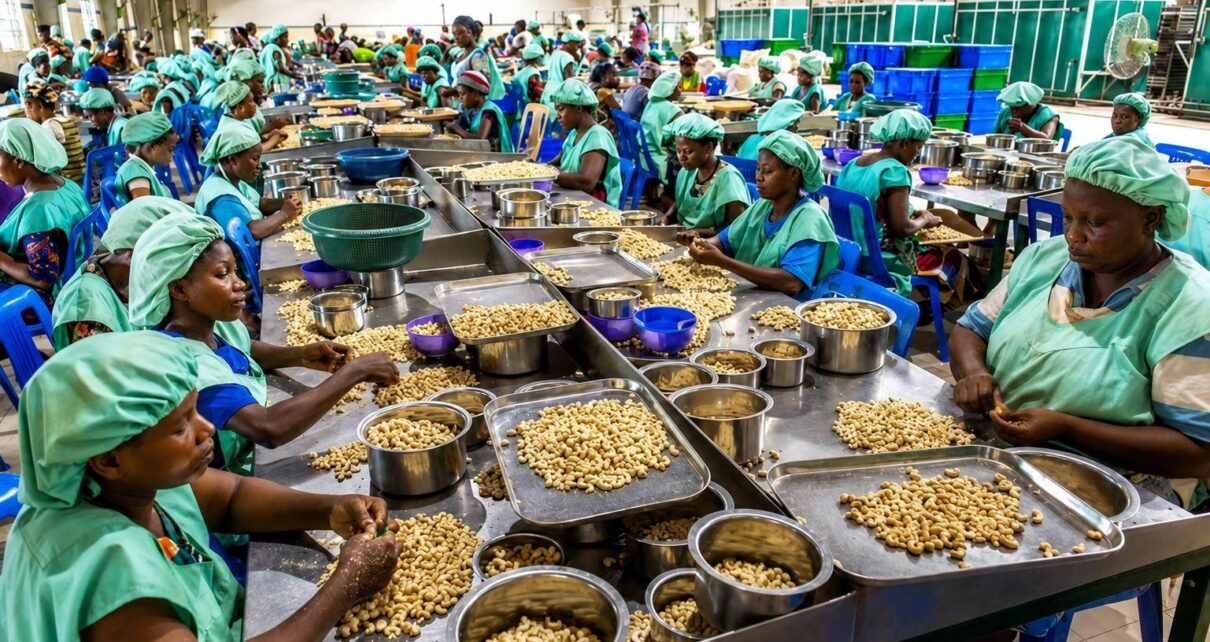
Despite progress in processing, raw material shortages remain a hurdle. The cashew nut industry, in particular, is grappling with smuggling, as traders divert raw nuts to neighboring countries before local processors can acquire them.
The minister took a firm stance on this issue, vowing to tighten border controls and prioritize supply chains for domestic factories. The government’s message is unequivocal: exporting raw cashews equates to exporting jobs and economic opportunities for young Beninese.
Cotton revival: a 700,000-ton target
The tour concluded with a bold plan for Benin’s most critical cash crop: cotton. Following three consecutive years of declining production, the government has set a target of 700,000 tons for the 2026-2027 season. To incentivize farmers amid rising input costs, a premium of 10 FCFA per kilogram will be paid once the national production threshold is met.
With a mix of strict enforcement, financial incentives, and large-scale industrial projects, Benin is laying the foundation for a more resilient agricultural economy. The remaining challenges—logistics and climate—are substantial, but the political will driving this transformation is unwavering.