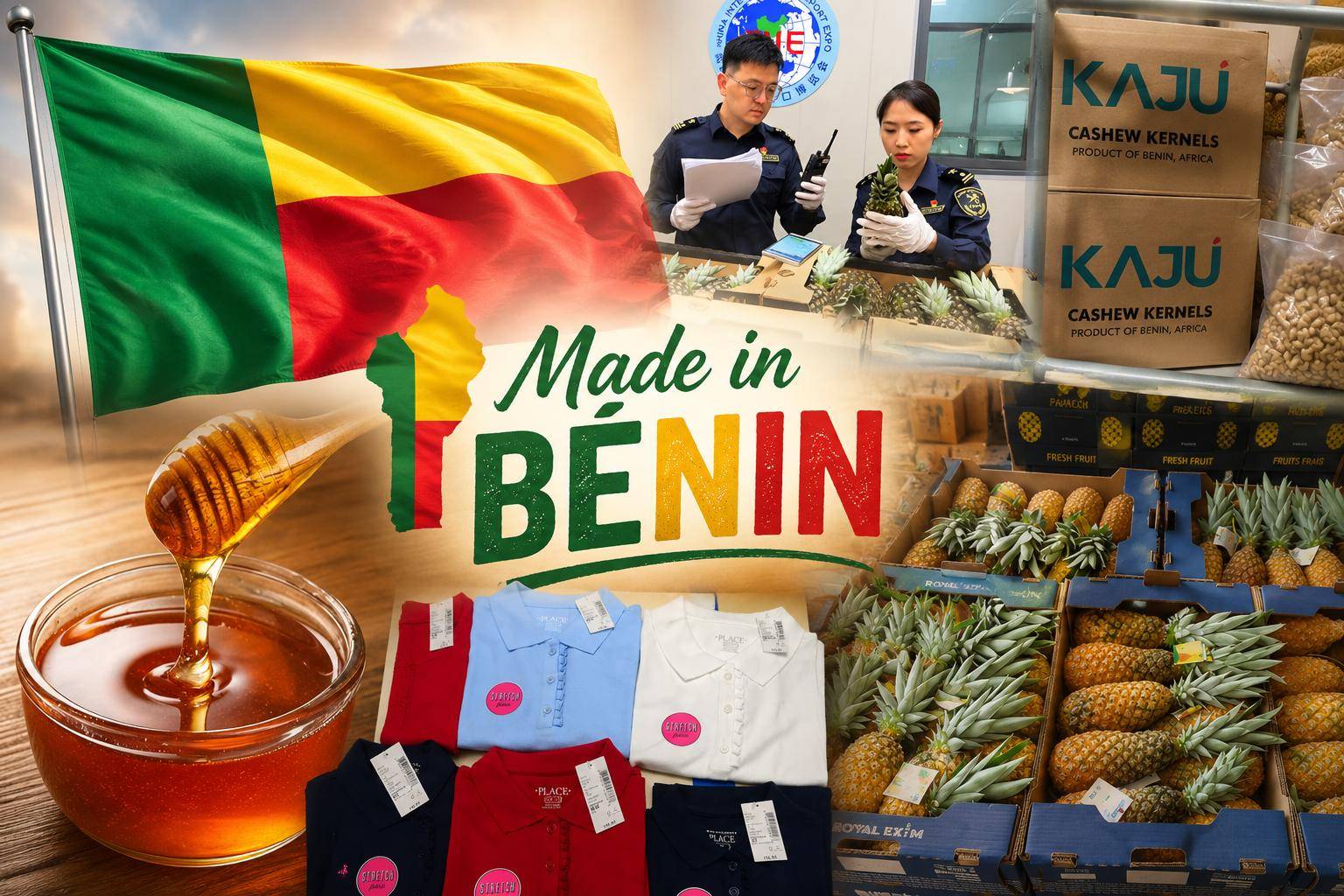
From the sugar loaf pineapple of Allada to premium soybeans from the Ouémé Valley and artisanal honey harvested in the hills, Beninese agricultural products are making a bold entrance on the world stage. This export surge is no accident—it’s the result of a deliberate government strategy under President Patrice Talon to dismantle trade barriers and meet the strictest international quality standards. A closer look at this green revolution reveals how local producers are transforming their fortunes while reshaping the nation’s economy.
The game-changing leap: meeting global standards
For years, Benin’s agricultural ingenuity was largely confined to domestic or regional markets, stifled by stringent phytosanitary requirements—particularly those imposed by the European Union and China. The case of pineapple exports perfectly illustrates this hurdle: after a voluntary suspension of shipments to Europe in 2017 due to compliance issues, Benin had to overhaul its entire approach. Exporting isn’t just about supply—it’s about surviving a gauntlet of regulations.
Recognizing the urgency, the government took decisive action. Under President Talon’s leadership, substantial investments were poured into upgrading national laboratories, including the Beninese Agency for Food Safety (ABSSA). These rigorous structural reforms paid off, securing the certifications that now grant Beninese goods permanent access to Western and Asian markets. Today, Beninese products stand out not just for their flavor but for their impeccable traceability and safety credentials.
The golden rise of Beninese honey: Europe’s new darling
The turning point came in February 2018, when the European Commission officially approved Benin’s honey for export to the EU. This landmark decision validated the product’s purity and unique qualities, often derived from natural, biodiversity-friendly beekeeping practices across northern and central Benin.
For local beekeepers, this 2018 breakthrough was transformative. What was once a humble local harvest is now a sought-after luxury in international markets, prized for its therapeutic benefits and distinctive aromas. The shift has stabilized incomes, offering fair and predictable prices that make beekeeping an increasingly attractive livelihood—especially for young people in rural areas.
Diversified champions on the global chessboard
The sugar loaf pineapple: Benin’s sweet ambassador
October 2021 marked another milestone when the Allada Plateau sugar loaf pineapple became Benin’s first Protected Geographical Indication (PGI), registered with the African Intellectual Property Organization (OAPI). Celebrated for its exceptional sweetness, this pineapple now graces fresh produce aisles in the West and is exported as 100% pure juice, carrying the banner of Beninese freshness to global tables.
Organic soybeans: from raw beans to high-value products
The industrial zone of Glo-Djigbé (GDIZ) is at the heart of this transformation. Benin no longer exports mere soybeans—it now ships processed, value-added products that meet international demand. The shift has opened doors in Europe and Asia, turning a once-ordinary crop into a premium export.
Cashew nuts: cracking open new opportunities
The cashew sector is following a similar upward trajectory. By gradually phasing out raw nut exports, Benin is adding value domestically, processing kernels into finished products before shipping them worldwide. This strategy has created thousands of jobs and boosted local processing capabilities, ensuring more of the profits stay within the country.
Real-world impact: the smile of Beninese farmers
On the ground, these successes translate into tangible improvements for farming communities. A soy producer from Savalou shared, “Today, we sell our harvest knowing we’ll get a fair price.”
Access to international markets has stabilized incomes, strengthened cooperatives, and reduced rural precarity. The push for compliance has also driven professionalization: farmers receive training, adopt modern harvesting techniques, and reduce chemical inputs—safeguarding soil health for future generations.
For Benin, this export boom is a major source of foreign currency and a powerful lever for trade balance improvement. With over 60% of the workforce in agriculture, these gains prove that farming is the backbone of national development.
The “Made in Benin” seal: a mark of excellence
Benin’s agricultural sector has undergone a complete transformation. From the 2018 honey certification to the 2021 PGI recognition for pineapples, the country has carved out a reputation for quality, institutional reform, and unwavering commitment. Whether it’s the golden honey from the forests or the sweet pineapples from the plateaus, Beninese craftsmanship now commands global respect.
This success story underscores a powerful truth: with clear policy vision and the dedication of producers, African agriculture can nourish the world with distinction. The “Made in Benin” label is no longer just a stamp—it’s a promise of prestige and trust.