In the Democratic Republic of the Congo, President Félix Tshisekedi has opted to return the referendum law to Parliament for a second reading, following the Constitutional Court’s ruling that the legislation aligns with the Constitution, albeit with reservations. This move comes as the ultimatum issued by the opposition coalition Article 64 approaches its deadline on August 15.
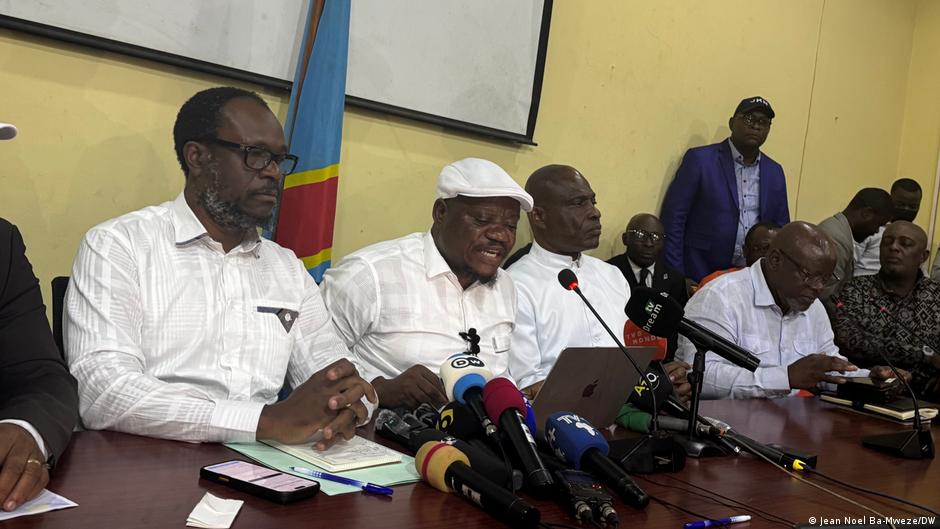
The C64, alongside over sixty civil society organizations, has demanded that the president abandon his constitutional reform plans by August 15 and reject the referendum law. They are also calling for an inclusive national dialogue. However, with the deadline just hours away, no date has been set for such discussions.
Tshisekedi’s tactical retreat amid mounting pressure
Many had anticipated that the referendum organization law would automatically take effect due to the lack of presidential promulgation within fifteen days, as stipulated in Article 140 of the Congolese Constitution. Instead, President Tshisekedi has chosen to send the bill back to Parliament for further deliberation based on the Constitutional Court’s observations.
According to Professor Bob Kabamba, a political science lecturer at the University of Liège in Belgium, this decision represents a tactical retreat for Tshisekedi. However, it does not signal an abandonment of his efforts to secure a path to remain in power beyond 2028, the end of his second term.

“It’s important to recognize the intense pressure Tshisekedi has faced—not only from the opposition but also from regional actors. These pressures, coupled with internal consultations, have forced him to backtrack by requesting a second reading of the law. While this is a retreat, it doesn’t mean he won’t explore alternative avenues to extend his time in office beyond 2028,”
C64 vows further action after August 15 deadline
The Article 64 coalition has acknowledged Tshisekedi’s decision to return the law to Parliament but remains steadfast in its demands. With the ultimatum expiring at midnight on August 15, the C64 has hinted at launching targeted initiatives, though the specifics remain undisclosed.
“When August 15 arrives, we will have no choice but to acknowledge that nothing has changed. We will then unveil a series of decisive measures through our C64 operations center to compel this regime to restore our freedoms and safeguard our national sovereignty,”
stated Franklin Tshiamala, Secretary-General of Leadership for Governance and Development (LGD), a platform linked to former Prime Minister Augustin Matata Ponyo.
The standoff escalates
From the government’s perspective, the referendum process is framed as a legitimate political and institutional initiative. Meanwhile, the C64’s ultimatum is dismissed as an attempt to impose an external agenda on the head of state.
“The ultimatum from C64 is theirs alone—perhaps designed to satisfy their backers. But the Republic continues to function as normal,”
asserted Adolphe Amisi Makutano, a member of the Union for Democracy and Social Progress (UDPS), President Tshisekedi’s party.The political tug-of-war shows no signs of abating. The August 15 deadline could mark the beginning of a new chapter in the Democratic Republic of the Congo’s turbulent political landscape.