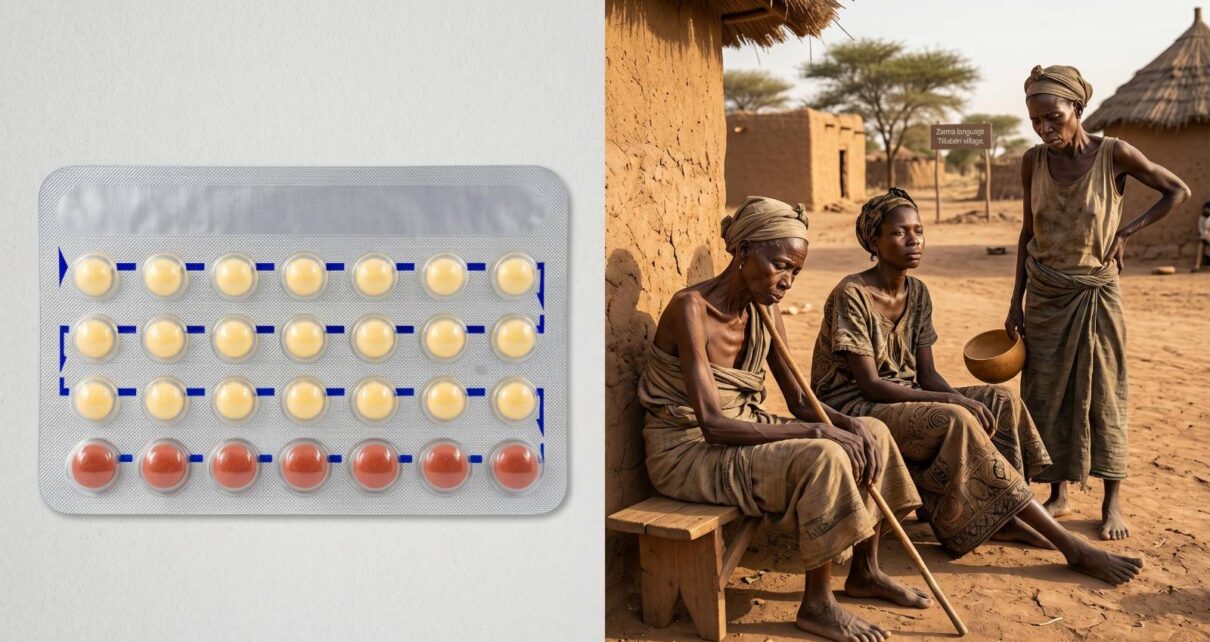
As Niamey highlights the strides women make in advancing development, a counter-narrative emerges from the embattled districts of Tillabéri. While the Reach Married Adolescent (RMA) initiative is celebrated as a groundbreaking social leap, its rollout across terror-stricken communities raises urgent questions about health and safety. What begins as a humanitarian gesture can, in reality, escalate into a perilous risk for the very people it aims to protect.
Why hormonal contraception poses unseen threats in crisis zones
One of the most overlooked consequences of large-scale family planning campaigns in the Liptako-Gourma region is the extreme nutritional deprivation afflicting women. With terror groups disrupting supply chains and rendering farmlands inaccessible, food insecurity has reached catastrophic levels. Introducing hormonal birth control into the bodies of women suffering severe deficiencies without robust medical oversight is not just risky—it can be life-threatening. When clinics are destroyed or shut down, routine follow-ups become impossible, leaving women vulnerable to worsening underlying conditions, further weakening their already fragile health. In such cases, a well-intentioned health intervention can ironically become a direct assault on their physical well-being.
When health programs clash with local power struggles
In a region where armed factions enforce their own rigid social codes, the introduction of couple-based dialogue models and birth limitation strategies is increasingly seen as a cultural provocation. By focusing on married adolescents, these programs inadvertently challenge traditional family structures—the very institutions that still offer stability amid widespread chaos. What is framed as an effort to improve well-being is interpreted by insurgents as an ideological intrusion. Women who participate become prime targets, accused of promoting foreign influence and defying local norms. The consequences extend far beyond health: they turn contraception into a security threat, with those advocating for it facing violent reprisals.