What 5.3 billion dollars from the World Bank means for Ivory Coast’s future
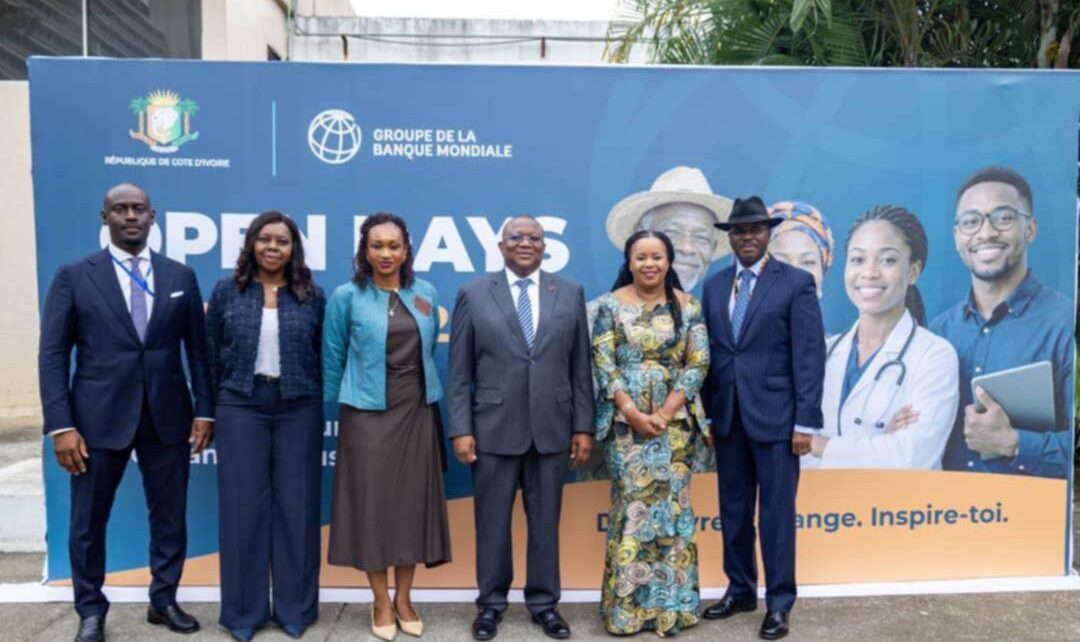
The World Bank Group’s active portfolio in Côte d’Ivoire now includes 25 projects totaling $5.3 billion, a figure highlighted at the opening of the first-ever World Bank Open Days in Abidjan on September 21, 2026. Speaking on behalf of Ivory Coast’s Minister of Planning and Development, the Minister of Communication emphasized the transformative potential of this funding, especially in job creation and infrastructure.
Over September 21–22, 2026, the Open Days event—titled “Jobs and Opportunities: Building Together for Inclusive Growth”—brought together university students, recent graduates, and entrepreneurs with project teams behind World Bank-funded initiatives. The focus? Education, employment, entrepreneurship, and infrastructure development, aligning with Ivory Coast’s National Development Plan (NDP 2026–2030), which targets three million new jobs, prioritizing youth and women.
Where the money goes: key sectors and recent milestones
The $5.3 billion portfolio spans critical sectors:
- Infrastructure: Roads, energy grids, and public transport systems to reduce trade barriers and improve connectivity.
- Agriculture: Support for smallholder farmers, climate-smart techniques, and value-added processing to boost food security.
- Energy: Expansion of renewable energy generation and grid access, reducing reliance on fossil fuels and cutting costs for businesses.
- Education: School construction, teacher training programs, and digital literacy initiatives aimed at equipping the next generation for skilled employment.
- Health: Hospital upgrades and maternal health programs to improve life expectancy and workforce productivity.
Since 2021, the International Finance Corporation (IFC) has directly invested nearly $2.7 billion in Ivory Coast, with the Multilateral Investment Guarantee Agency (MIGA) providing investment guarantees to boost private sector confidence. In late 2024, Ivory Coast executed its first debt-for-development swap with World Bank support—converting €400 million in commercial debt into educational and social programs. In 2025, the country secured Africa’s first sovereign sustainability-linked loan ($433.3 million), backed by guarantees from the IBRD and MIGA.
Beyond the portfolio: a long-term partnership with big promises
The $5.3 billion active portfolio marks a milestone, but it pales in comparison to the World Bank Group’s upcoming $17 billion commitment for 2026–2030—comprising $10 billion from the World Bank, $5 billion from the IFC, and $2 billion from MIGA. This pledge was announced during the Consultative Group for Financing the NDP 2026–2030 in July 2026 and underscores a deeper integration between the World Bank and Ivory Coast’s economic strategy.
On September 10, 2026, Ivory Coast’s Minister of Planning and Development met with Harold Tavares, the World Bank’s Executive Director for the Africa II constituency, to discuss aligning the next Country Partnership Framework with the NDP 2026–2030. The goal: maximizing the social and economic return on every dollar invested.
Real-world impact: what are Ivorians seeing now?
Beyond the numbers, the World Bank’s involvement is reshaping lives and livelihoods:
- **Local businesses**, especially SMEs, are gaining access to financing previously unavailable, enabling expansion and job creation.
- **Farmers** in the north and west report improved harvests thanks to irrigation and crop insurance programs.
- **Women-led cooperatives** now manage solar-powered cold storage units, reducing post-harvest losses and increasing income.
- **Young professionals** are enrolling in vocational training funded by the World Bank, filling critical skills gaps in healthcare and tech.
- **Rural communities** see new roads and electrification projects cutting travel time to markets and hospitals by half.
The Open Days in Abidjan weren’t just about announcements—they were about accountability. Attendees challenged project leaders on delays and accessibility, reflecting a growing demand for tangible results.
What’s next: aligning investment with national priorities
Looking ahead, the World Bank Group is doubling down on impact. With a $17 billion commitment on the table, Ivory Coast is positioned to become a regional model of sustainable growth—if execution meets ambition. The upcoming Country Partnership Framework will need to prioritize:
- Fast-tracking job-rich infrastructure projects in high-unemployment regions.
- Scaling up vocational and digital education programs to prepare youth for the future of work.
- Strengthening public-private partnerships to attract investment without increasing debt.
- Ensuring transparency in fund allocation and measurable outcomes tied to the NDP goals.
As Ivory Coast prepares to host more Open Days and stakeholder forums, the question remains: Can this surge in investment translate into lasting prosperity for all Ivorians?