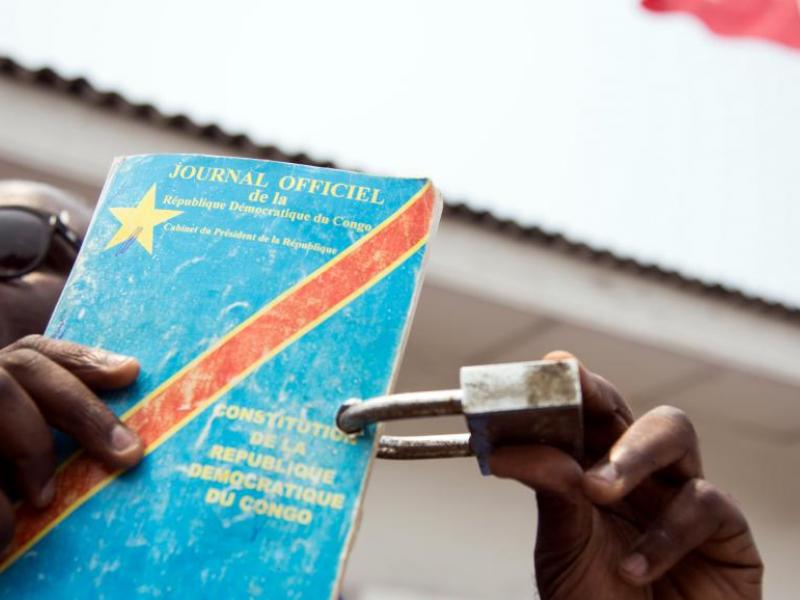
In DRC, constitutional reform takes center stage at student scientific forums as government fiercely defends changes
- Politics
The Ministry of Higher Education, Scientific Research and Innovation is hosting three-day “scientific” colloquia in Kinshasa, Kisangani and Lubumbashi from June 10-12. According to the minister, these forums aim to strengthen university contributions to national debate while a referendum bill was passed in parliament yesterday.
“Nearly twenty years after the 2006 Constitution came into force, these colloquia will conduct in-depth scientific analysis of its achievements, limitations and evolutionary perspectives adapted to the DRC’s current realities. The discussions must yield recommendations to reinforce the rule of law, democratic governance and sustainable development,” stated Minister Sombo Ayanne Safi Mukuna Marie-Thérèse.
The events are organized around three thematic hubs: Kinshasa for geostrategic issues, Kisangani for sociological and environmental matters, and Lubumbashi for industrial and energy transition topics.
The ministry invites university professors, constitutional law experts, social scientists, academic institutions, research centers and advanced-level students to participate. It calls on higher education leaders to widely disseminate this information and mobilize their institution’s researchers to ensure the forums’ success.
“Through this initiative, the Ministry reaffirms the University’s central role as an ideas laboratory and source of proposals for the nation. Active participation from the academic community is expected to guarantee the scientific quality of reflections and the relevance of recommendations,” added the minister.
The constitutional reform debate has resurfaced in Congo’s sociopolitical landscape following territorial losses to the M23 rebellion, allegedly supported by Rwanda. While the ruling UDPS party officially advocates for constitutional reform, the proposal faces strong opposition. Reform supporters criticize the 2006 Constitution as “trapped” and unsuited to the country’s realities, citing governance and nationality issues. Some argue this could jeopardize the 2028 elections.
Opposition groups and civil society reject the reform, viewing it as an attempt by President Tshisekedi to extend his mandate beyond the constitutionally mandated two terms, expiring in January 2029. They argue the government’s poor performance since 2023 doesn’t justify such changes. Meanwhile, two coalitions have emerged: the Article 64 Coalition for Constitutional Order Defense and the Congolese Coalition for Constitutional Change, each claiming widespread public support.