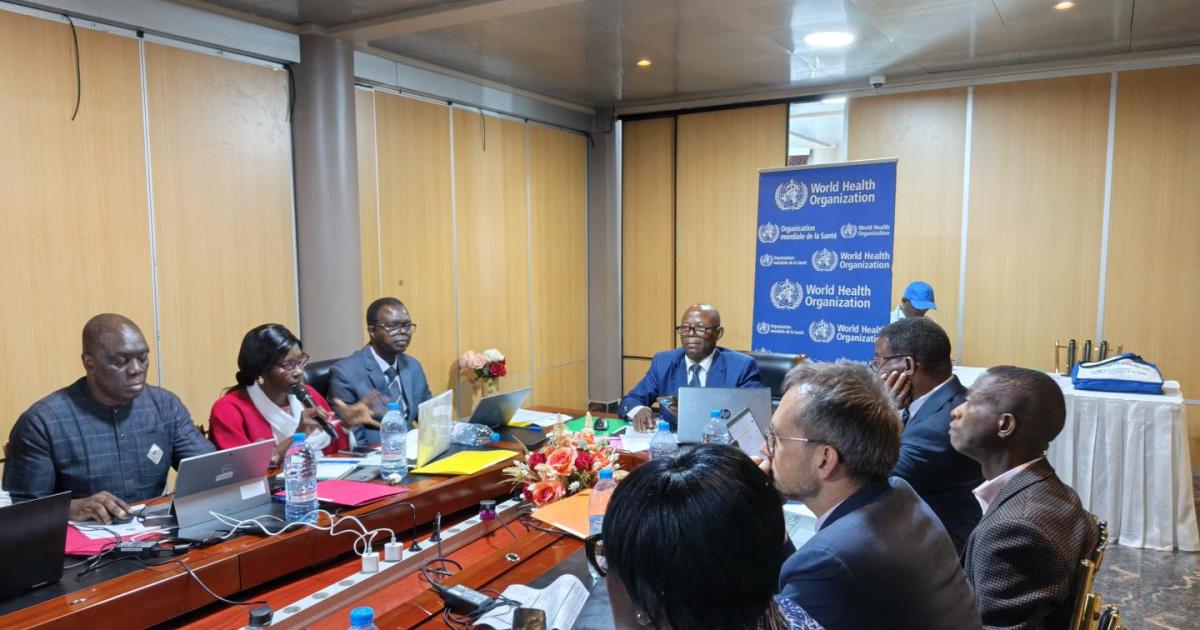
Mbankomo workshop explores tax reforms to curb tobacco harm and fund health systems
The three-day gathering in Mbankomo wasn’t about bricks, mortar or medicines. Instead, it brought together policymakers, health officials, economists and civil society to examine a single lever with outsized impact: tobacco taxation. The core question driving the discussions was clear—how can fiscal policy save lives and secure long-term financing for Cameroon’s health system?
Supported by the World Health Organization (WHO), delegates included officials from the Ministry of Public Health, the Ministry of Finance, Customs, parliamentarians, civil society representatives and technical partners. Together, they examined how well-designed tax policy on tobacco can serve as both a public health shield and a development catalyst.
Tobacco’s heavy toll on Cameroon’s health and economy
Tobacco remains one of the world’s leading preventable causes of death, and its burden in Cameroon is significant. Adult smoking rates hover around nine percent, while more than ten percent of adolescents aged 13 to 15 use tobacco products. Alarmingly, nearly 37 percent of the population is exposed to secondhand smoke. The country records approximately 66,000 tobacco-related deaths annually.
Beyond mortality, tobacco fuels a surge in cancers, cardiovascular diseases, strokes and chronic respiratory illnesses. It also places growing strain on households, health services and the national economy. Despite this, cigarettes remain relatively inexpensive in Cameroon. In 2024, the retail price of the most popular pack was only $4.07 (PPP-adjusted), well below the African average of $5.06 and the global average of $6.98. Taxes accounted for just 36 percent of the retail price—far below the WHO’s recommended 75 percent threshold.
Why higher tobacco taxes save lives and money
National leaders opened the workshop by stressing that raising tobacco taxes is among the most cost-effective ways to reduce consumption. Price sensitivity is especially pronounced among youth; when cigarettes become less affordable, fewer adolescents start smoking. A tax increase today doesn’t just curb immediate purchases—it prevents disease, disability and premature death for decades to come.
But the benefits extend beyond health. Smarter tobacco taxation generates additional domestic revenue that can be invested in universal health coverage, prevention of non-communicable diseases and stronger health infrastructure. The message is unambiguous: well-crafted fiscal policy advances both public health and economic resilience.
Evidence-based policy begins with reliable data
To design effective reforms, policymakers need solid data. Participants analyzed tobacco consumption patterns, economic costs, links to non-communicable diseases, current tax structures, market dynamics and international best practices. Experts underscored that public policy must be guided by evidence, not perception.
Dr. William Maina, Senior Project Officer at WHO Africa, emphasized tobacco’s global death toll and its role in cardiovascular disease, stroke and chronic respiratory conditions. Nicotine addiction also harms brain development, fertility and cardiovascular health—especially in young people.
The workshop dismantled common myths about higher tobacco taxes, such as fears of revenue loss, massive job cuts or runaway illicit trade. International data shows these concerns are unfounded when reforms are carefully designed and enforced with appropriate control measures.
Tax simulation reveals clear path forward
A highlight of the meeting was the presentation of WHO’s TaXSiM model, which simulates the health and fiscal impacts of different tax scenarios before implementation. Using Cameroon-specific data, several reform pathways were modeled, yielding compelling results.
Two successive measures were examined:
- Raising the minimum specific tax from 5,000 to 10,000 FCFA per 1,000 cigarettes in 2027;
- Increasing it to 15,000 FCFA per 1,000 cigarettes in 2028, applied uniformly to both imported and locally produced products.
Under this scenario, cigarette sales would fall from 162.9 million packs in 2026 to 144.1 million in 2027, then to 131.9 million in 2028—a cumulative drop of about 19 percent. Smoking prevalence would decline from 810,000 to 744,000 users, preventing nearly 66,000 new smokers by 2028.
Excise revenue would rise from 15.2 billion FCFA to 28.8 billion FCFA in 2027 and to 38.3 billion FCFA in 2028, with total tax revenue increasing from 32.6 billion FCFA to 57.3 billion FCFA—generating nearly 25 billion FCFA in additional funds compared with baseline projections.
Experts noted that these figures prove there is no trade-off between public health improvement and economic development. Progressive tobacco taxation advances both goals simultaneously.
Tobacco taxes as a sustainable health financing tool
With international health funding declining, tobacco taxation offers Cameroon a strategic opportunity to boost domestic resource mobilization. Proceeds could support:
- Universal Health Coverage initiatives;
- Programs to prevent non-communicable diseases;
- Smoking cessation services;
- Upgrades to health infrastructure;
- Health promotion activities.
For participants, tobacco taxation emerged as a rare policy tool capable of improving population health, reducing future disease-related costs and strengthening the health system’s financial sustainability.
New nicotine products pose fresh threat to youth
Discussions also highlighted the rapid rise of emerging nicotine products—often disguised as pens, smartwatches, lipsticks, toys, candies or chewing gum. These items are marketed aggressively to adolescents using sophisticated tactics.
A screening showing a teen using an e-cigarette hidden inside a smartwatch left a strong impression on attendees. WHO officials warned that these products are not harmless. They create addiction, expose users to toxic substances and risk normalizing nicotine use among young people.
Participants called for early regulatory and fiscal measures to prevent these products from taking hold in Cameroon’s market.
Consensus on next steps: evidence-driven reform
After three days of deliberation, delegates recommended a suite of measures to advance tobacco control through fiscal policy:
- Gradual increase of the minimum specific tax to 15,000 FCFA per 1,000 cigarettes;
- Uniform application of this tax to imported and domestic products;
- Strengthened regional dialogue on excise duties within CEMAC;
- Creation of a national technical working group on tobacco taxation;
- Establishment of a permanent monitoring and evaluation system;
- Improved availability of fiscal and trade data;
- Acceleration of a national tobacco control fund;
- Development of a national tobacco product traceability system.
Recognizing that tobacco control requires collective action, they also urged intensified awareness campaigns—especially targeting youth—support for tobacco farmers transitioning to alternative crops, implementation of the Protocol to Eliminate Illicit Trade in Tobacco Products and the adoption of a national traceability system.
Dr. Colette Taka Joro, Permanent Secretary of the National Committee for Drug Control, stressed that high-level dialogues with government, parliamentarians and stakeholders will be essential to accelerate reform adoption and ensure broad ownership.
A shared vision for Cameroon’s future
Closing the workshop, Dr. Hassan Ben Bachir, Director of Health Promotion at the Ministry of Public Health, framed the deliberations in a broader context: “Tobacco taxation is far more than a revenue tool. It’s an investment in people’s health. By protecting youth from starting to smoke and securing sustainable financing for our health system, we are investing in Cameroon’s future. The recommendations from this workshop provide a robust roadmap to translate scientific evidence into public policy that benefits everyone.”
In Mbankomo, participants left with a shared conviction: tobacco taxation is not merely a budgetary issue. It is a prevention instrument, a youth protection mechanism, a national resource mobilizer and a long-term investment in human capital. The data presented throughout the workshop demonstrates that bold tobacco tax policy can simultaneously reduce consumption, save lives, ease the burden of non-communicable diseases and generate substantial funds to finance national health priorities.
Every tax increase represents thousands of lives protected. Every evidence-based reform charts a path toward a Cameroon where fewer young people start smoking, families are better shielded from tobacco’s consequences and the health system has the means to meet its people’s needs sustainably. By leveraging tobacco taxation as a strategic public health and financing lever, Cameroon can today secure healthier tomorrows for generations to come.”