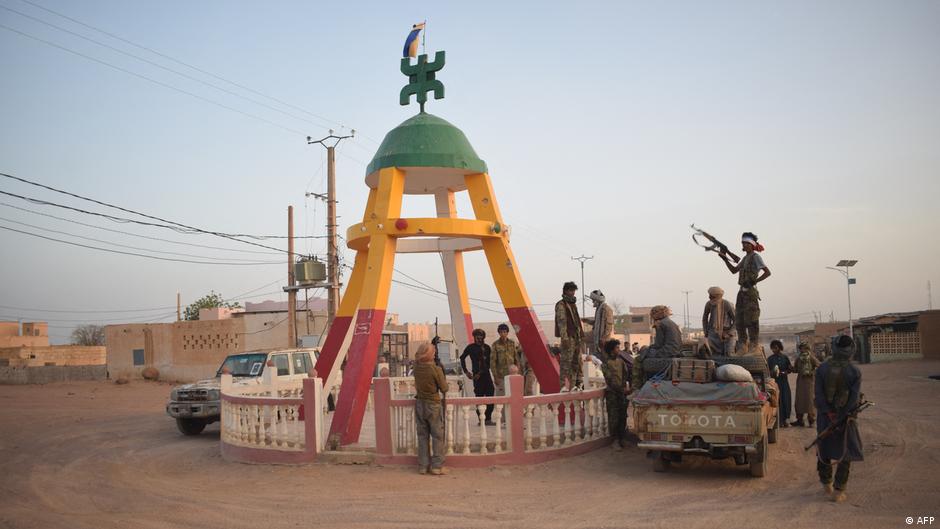
The latest wave of coordinated attacks in Mali has left cities from Bamako to Gao in turmoil, with simultaneous offensives striking key urban centers. The Front de Libération de l’Azawad (FLA) and the Groupe de soutien à l’islam et aux musulmans (JNIM) have claimed responsibility for the assaults, exacerbating an already volatile security landscape.
General Assimi Goïta, leader of Mali’s transitional government, resurfaced publicly following the three-day siege, standing alongside the Russian ambassador to Mali. During the meeting, Goïta praised the “strength of the partnership with the Russian Federation”, though behind the scenes, tensions linger as Africa Corps mercenaries have begun negotiating their withdrawal from Kidal—a city now under rebel control. The FLA has made their departure a non-negotiable condition for further talks.
In a solemn tribute, Mali honored the late General Sadio Camara, the Defense Minister killed in a jihadist raid on his residence just days prior. The nation now faces a pivotal question: What lessons must be drawn from these violent escalations? The discussion unfolds as analysts and commentators weigh in on the crisis.
Voices shaping the debate
Mali’s unfolding turmoil has sparked a robust exchange of ideas among thought leaders:
- Étienne Fakaba Sissoko, economist and spokesperson for the Coalition des forces pour la République (CFR), whose work scrutinizes governance in post-coup regimes and the Sahel’s shifting power dynamics.
- Tiambel Guimayara, a prominent Malian journalist and editor-in-chief of LaVoix du Mali, offering ground-level perspectives on the conflict.
- Frederic Samy Passalet, a francophone literature scholar and conflict prevention expert, whose research dissects foreign influence in African geopolitics.
- Teehl Loé Konaté, a project coordinator and panafricanist analyst, leading critical conversations on Mali’s cultural and historical trajectory within broader African solidarity movements.
To delve deeper into the analysis, listen to the full discussion via the audio player above.