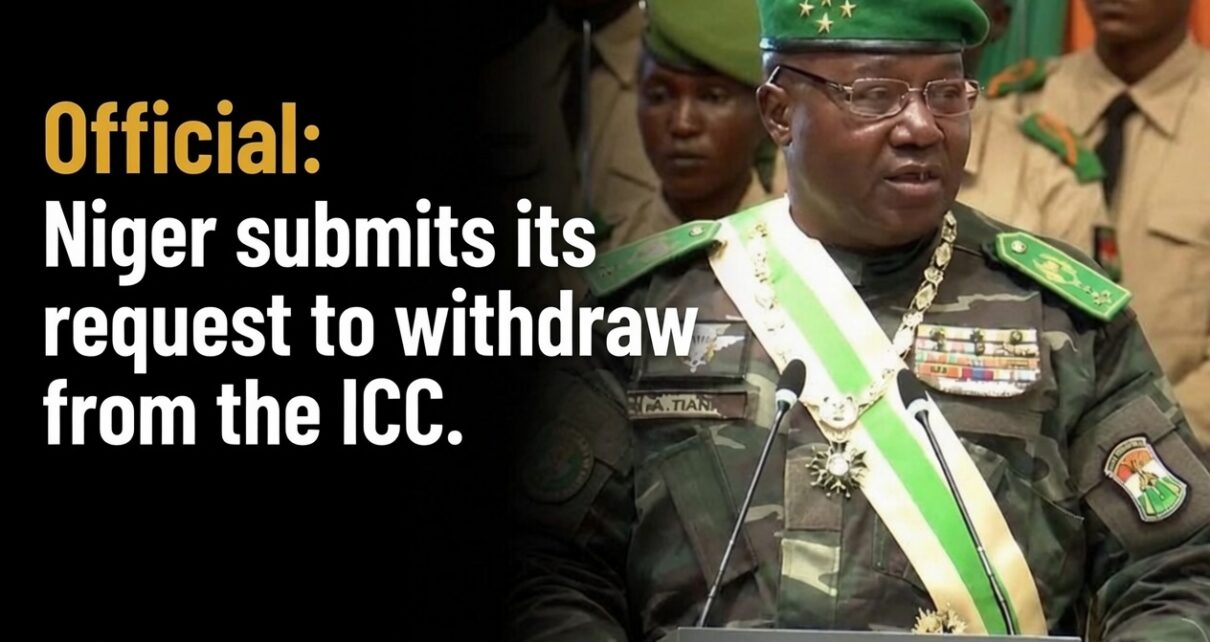
Niger has officially initiated its withdrawal from the International Criminal Court (ICC), a move that aligns with the broader shift in policy undertaken by the military authorities since they assumed power in July 2023. By taking this step, Niamey asserts its commitment to safeguarding national sovereignty and challenges the operations of an institution that has frequently faced criticism across the African continent.
Criticism of selective justice
The Nigerien authorities contend that the ICC has directed the vast majority of its prosecutions toward African nations. Since its establishment in 2002, most investigations and legal actions pursued by the Hague-based court have indeed involved states on the continent. This imbalance has for years fueled accusations of “selective justice” voiced by numerous African leaders.
Geopolitical realignment
This decision also arises amid a geopolitical reorientation by Niger. Following the rupture with several Western partners, the regime in Niamey now prioritizes closer collaboration with fellow members of the Alliance of Sahel States (AES), which includes Mali, Burkina Faso, and Niger. The three nations have launched multiple joint initiatives aimed at strengthening their political and security autonomy.
The withdrawal from the ICC adds to a series of measures underscoring the authorities’ determination to diminish the sway of international bodies perceived as incompatible with national interests. Supporters of the regime view this trajectory as an assertion of the country’s sovereignty. Critics, however, argue that distancing itself from international justice mechanisms could undermine efforts to combat impunity and deprive victims of serious crimes of an additional avenue for recourse.
Legal timeline and implications
On the legal front, the withdrawal is not immediate. According to the Rome Statute, the founding treaty of the ICC, the process takes effect only one year after the official notification is submitted to the United Nations. Moreover, any investigations already opened prior to the withdrawal date remain within the court’s jurisdiction.
By choosing to leave the ICC, Niger adds its voice to the broader debate on Africa’s position within international institutions and the balance between national sovereignty and international criminal justice.