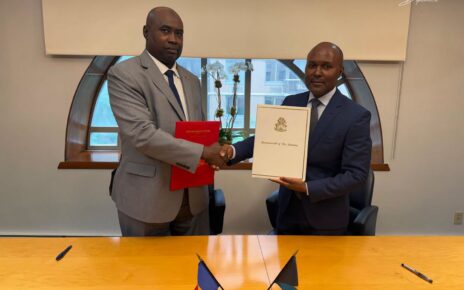
The relationship between Senegal and Botswana is embarking on a fresh chapter. Through high-level diplomatic discussions, Presidents Bassirou Diomaye Faye and Duma Boko have affirmed their commitment to fostering more robust economic collaboration between Dakar and Gaborone. Both leaders, who came to power within months of each other following significant political transitions, share a common understanding of the continent’s challenges and a deep dedication to principles of national sovereignty.
An nascent South-South collaboration
Currently, commercial interactions between Senegal and Botswana remain very limited. Geographic distance, spanning thousands of kilometers, and their affiliation with distinct integration blocs—ECOWAS for Dakar and SADC for Gaborone—pose considerable challenges. There are no direct preferential trade agreements linking the two economies, and cross-investments are marginal.
This gap is precisely what both presidents aim to bridge. The African Continental Free Trade Area (AfCFTA), which became operational in 2021, now provides a legal framework that can serve as a foundation for bilateral partnerships that were previously nonexistent. Faye and Boko intend to leverage this instrument to streamline trade and stimulate the flow of goods, services, and expertise between their nations.
Uncovering industrial complementarities
Theoretically, the two economies exhibit contrasting yet potentially complementary profiles. Botswana, long celebrated as a model for mining governance in Africa, primarily generates its revenue from diamonds, being the world’s leading producer by value. For several years, the country has been actively working to diversify its productive base, develop local processing capabilities, and reduce its reliance on a single sector.
Senegal, for its part, aspires to enhance its hydrocarbon sector with the exploitation of the Sangomar and Grand Tortue Ahmeyim fields, while simultaneously consolidating its agricultural and fisheries strengths. Dakar is also developing recognized expertise in financial services, digital technology, and university education—areas where Gaborone could find valuable francophone African partners. The exchange of experiences in managing extractive revenues represents another clear avenue for dialogue, particularly given Botswana’s sovereign wealth fund, which has been sustained by diamond royalties for decades.
Economic diplomacy for a new agenda
For the Senegalese president, this engagement with Gaborone is part of a broader diplomatic strategy. Since taking office in April 2024, Diomaye Faye has been actively cultivating relationships with diverse African partners, extending beyond traditional West African and Maghreb circles. Botswana, often ranked among the continent’s most stable democracies, offers an appealing showcase for an administration that advocates a clear departure from past governmental practices.
Duma Boko, a lawyer by training and a prominent opposition figure who ascended to power in late 2024 following a political shift in Gaborone, shares this reformist posture. His arrival marked the end of nearly sixty years of the Botswana Democratic Party’s dominance, sending a powerful signal to African populations seeking political renewal. Consequently, both leaders can draw upon a convergence of narratives to lend symbolic weight to their partnership.
The challenge now lies in translating these intentions into concrete projects. Foreign ministries will need to identify priority sectors, overcome logistical hurdles such as the absence of direct air links, and establish a legal environment conducive to cross-investments. Without operational mechanisms, this declaration risks remaining an unfulfilled promise, much like many memorandums signed between African states. The potential establishment of a joint commission or a bilateral business forum would serve as an initial indicator of credibility. Both heads of state have reaffirmed their collective determination to accelerate this dynamic.