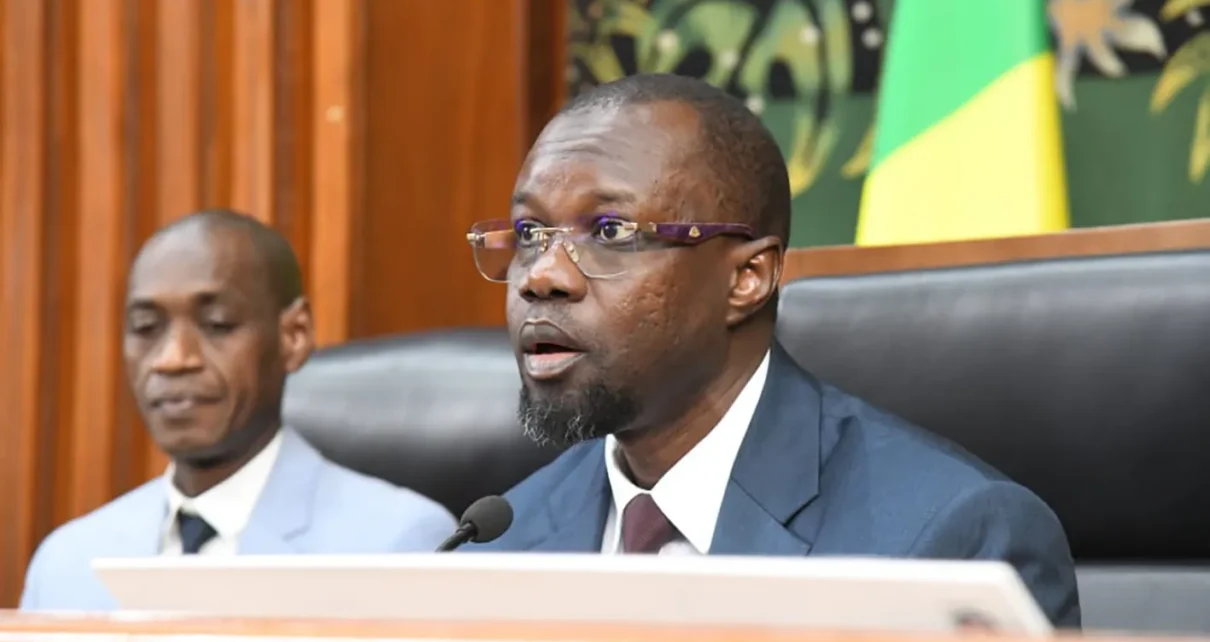
In a decisive address to the National Assembly, Ousmane Sonko, President of Senegal’s National Assembly, firmly refuted persistent rumors suggesting an ultimatum had been issued to the Republic’s President regarding constitutional reforms. His categorical denial aimed to quell political speculation and reinforce the legitimacy of parliamentary proceedings.
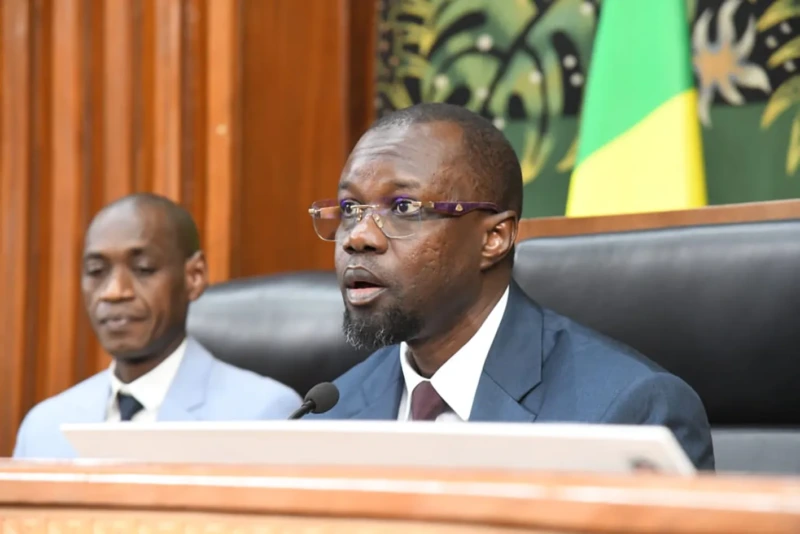
During a plenary session focused on labor and social security codes, Sonko addressed lawmakers to clarify the Assembly’s role in the ongoing constitutional revision process. With precision, he dismantled claims of institutional pressure, stating emphatically, “This is false. No ultimatum was ever directed at the President.”
The Speaker underscored that the Assembly’s initiative operates strictly within constitutional boundaries, emphasizing that no confrontation with the executive branch is intended. His remarks sought to contextualize the legislative move as a routine institutional process rather than a political maneuver.
Constitutional legitimacy and institutional harmony
Sonko highlighted the 2006 decision by the Constitutional Council as a foundational reference, affirming the Assembly’s authority to pursue constitutional amendments with a qualified three-fifths majority. This legal precedent, he argued, ensures the validity of the current procedure, dismissing assertions of procedural overreach.
Addressing political narratives that framed the process as contentious, he dismissed the notion of a crisis at the state’s highest levels. Instead, he described the interaction between institutions as a “dialogue of powers,” where each body exercises its constitutional mandate without encroaching on the others. The Assembly’s actions, he insisted, neither constitute an overstep nor exert undue influence on the executive.
In closing, Sonko quipped, “Those hoping for a crisis at the summit of the state will have to look elsewhere.” His statement reinforced the procedural continuity of the constitutional reform, asserting that the Assembly would proceed according to established legal frameworks, irrespective of the executive’s formal stance.
The Speaker concluded by reaffirming the importance of adhering to constitutional mechanisms, portraying the process as both stable and legally sound.