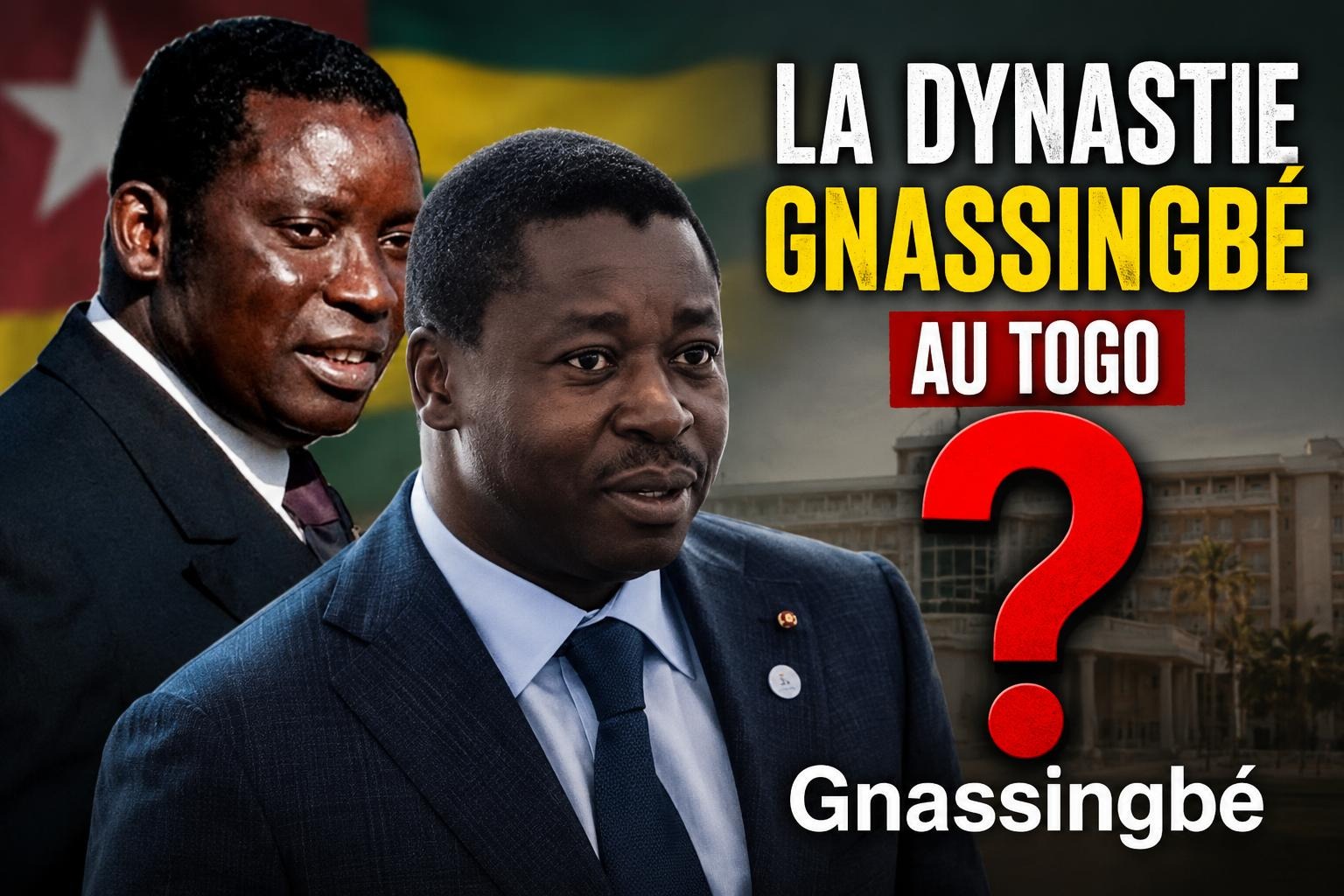
The Republic of Togo holds a dubious distinction: it is home to Africa’s longest-standing political dynasty. After Gnassingbé Eyadéma ruled for 38 years, his son, Faure Gnassingbé, now enters his third decade in power. By tightly controlling institutions and securing unwavering military loyalty, the current president appears to have replicated his father’s authoritarian blueprint. Evidence suggests he has embraced the idea of a lifelong presidency, destined to end only with his death, just as it did for Eyadéma.
From dynasty to dictatorship: when legacy trumps national progress
The roots of Togo’s political paralysis lie in the regime’s transformation into a familial fiefdom rather than a functioning government. Since 1967, power has been treated as a private inheritance by the Gnassingbé clan and its closest allies. For Faure Gnassingbé, stepping down is not a political choice—it is a survival imperative.
Abandoning the presidency would expose the ruling circle to scrutiny over financial mismanagement, systemic corruption, and past atrocities, particularly the 2005 bloody transition that claimed hundreds of lives. For the clan, retaining power is no longer a matter of governance; it is a matter of personal and legal survival. This fear of accountability has locked the president into an unbreakable cycle of domination, where relinquishing office is synonymous with risking everything.
Constitutional coup: rewriting laws to erase term limits
Togo’s recent shift to a parliamentary system has extinguished the last flicker of hope for democratic transition. Under the new structure, Faure Gnassingbé serves as President of the Council of Ministers, effectively bypassing presidential term limits and direct elections.
The constitutional overhaul ensures no return to democracy:
- Indirect leadership selection: Citizens no longer vote directly for their head of state, removing the possibility of a punitive electoral outcome.
- Permanent mandate through proxy: As long as his party, UNIR, wins orchestrated legislative elections, he remains in power indefinitely.
This legal engineering mirrors the path charted by Eyadéma, who in 2002 amended the constitution to ensure he could die in office in 2005. Where his father relied on brute force to defy norms, the son weaponized the law itself to entrench autocracy.
The military’s iron grip: why Togo’s armed forces won’t let go
The final pillar propping up this dynastic stranglehold is the Togolese Armed Forces (FAT). Established by Eyadéma with deep regional and clan-based loyalties, the FAT functions as the regime’s backbone. Senior officers share economic and security interests tightly interwoven with those of the ruling family.
“In Togo, the army does not safeguard the state; it shields a dynasty from its own people’s aspirations.”
For the generals, Faure Gnassingbé’s departure would mean losing privileges and destabilizing their web of influence. The president is a willing hostage to this pretorian system, knowing his safety depends on staying in power—and that the military would never accept a successor outside the established order. This symbiotic bond seals his fate to the Marina Palace, where he remains trapped in a gilded prison of his own making.
In the end, Faure Gnassingbé has inherited not just his father’s title, but his fate. Bound by a clan that refuses to surrender its spoils, shielded by an army that fears change, and shielded by laws he authored himself, he has sentenced himself to eternal rule. The tragedy of Togo is that history repeats itself: like Eyadéma before him, Faure Gnassingbé will govern until nature takes its course. But by denying the nation a peaceful exit, he risks leaving behind an explosive legacy—one where the dynasty’s collapse could plunge the country into chaos.