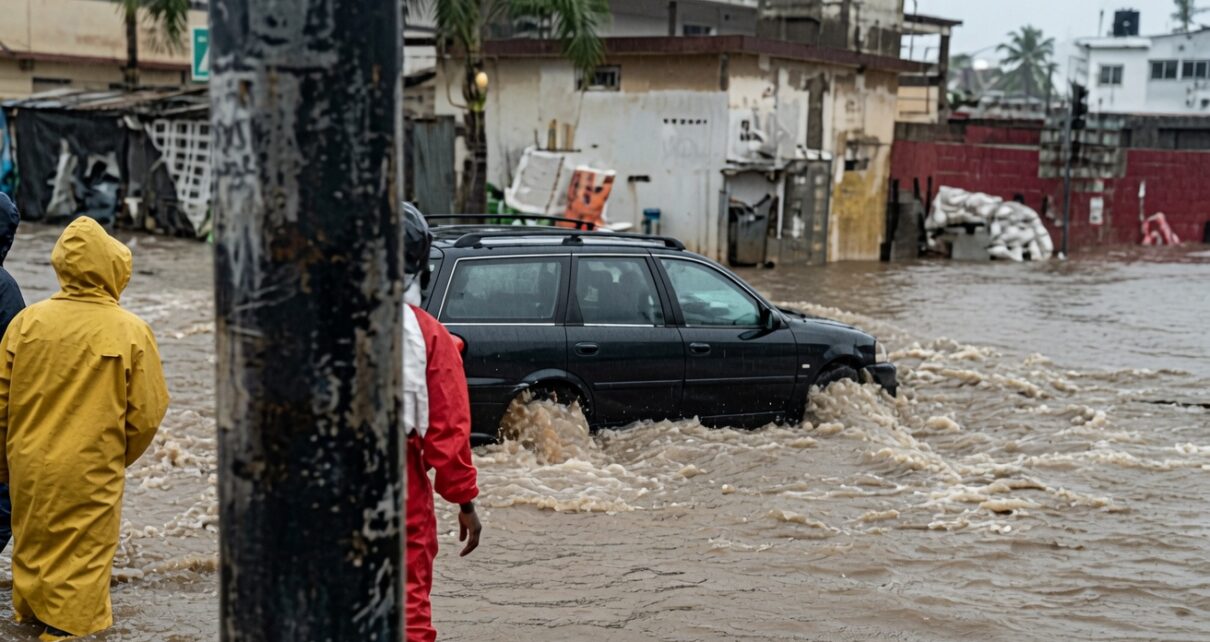
With each annual return of the rainy season, Togo grapples with a familiar cycle of devastation. Widespread inundation transforms thoroughfares into waterways, submerges residential areas, and forces countless households to independently manage the resulting damage. For a significant segment of the Togolese populace, these climatic events are no longer anomalies but an entrenched and recurring reality.
Following over six decades of continuous leadership by the Gnassingbé family, a considerable portion of the citizenry believes the nation is due for a fundamental shift in its political trajectory. Despite a multitude of assurances issued over the years, the fundamental issues affecting daily life persist: elevated unemployment rates, an ever-escalating cost of living, entrenched destitution, and restricted opportunities for the future, particularly for the younger generation.
The onset of seasonal precipitation invariably reignites widespread criticism concerning the state of national infrastructure. Numerous urban sectors suffer from inadequate drainage systems, rendering major arteries swiftly impassable and leading to substantial material losses during periods of heavy rainfall. A vocal segment of the population laments the insufficient long-term investment in public utilities designed to mitigate these predictable and recurring disasters.
Within this challenging environment, prominent figures from the opposition and civil society increasingly assert that the ruling establishment prioritizes the interests of an allied elite, even as the economic hardships endured by the majority of the populace intensify. They contend that public funds ought to be redirected towards enhancing living standards, bolstering infrastructural development, fostering employment opportunities, and safeguarding the most vulnerable communities, rather than being primarily allocated to sustain a political framework that has been in place for decades.
Many observers anticipate that the current rainy season, regrettably, may not deliver the anticipated respite. Instead, it is poised to further expose the shortcomings of existing public policies concerning urban planning and hazard mitigation. Absent comprehensive reforms and appropriately scaled investments, the most economically disadvantaged households will inevitably continue to bear the disproportionate burden of these consequences.
As a multitude of challenges converge, an expanding segment of public opinion holds that the nation requires a significant overhaul of its governance mechanisms to more effectively address the social, economic, and environmental aspirations of the Togolese people.