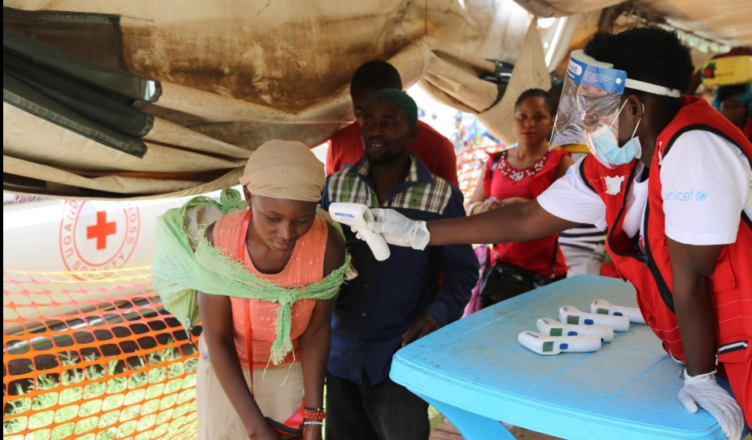
The Ebola virus epidemic continues its relentless advance across the Democratic Republic of Congo (DRC). Since its initial declaration in mid-May, health authorities have recorded 1,203 confirmed cases, tragically leading to 321 fatalities.
Amidst these challenging circumstances, 148 patients have successfully recovered. However, a significant number, 419 individuals, remain either hospitalized or in isolation. This particular outbreak, caused by the Bundibugyo strain, has now affected 34 health zones, primarily concentrated in the Ituri province, which remains the epicenter. The virus has also spread to Nord-Kivu and Sud-Kivu provinces.
Containment efforts face numerous obstacles. Health officials highlight community resistance to post-mortem testing, the limited capacity for patient care within Ituri, and a contact tracing rate that consistently falls short of the crucial 95% target. We urge the public to report any suspected cases immediately, adhere strictly to hygiene protocols, and avoid direct contact with the remains of deceased individuals.
International partners are intensifying their support. Jean Kaseya, Director General of the Africa Centres for Disease Control and Prevention (Africa CDC), affirmed the ongoing, coordinated response involving the World Health Organization (WHO), the European Centre for Disease Prevention and Control (ECDC), alongside Congolese and French authorities, all working to curb the epidemic’s spread.
From his perspective, WHO Director General Tedros Adhanom Ghebreyesus underscored how the persistent armed conflict severely complicates health operations. The unrest restricts access to affected areas, disperses individuals who have been in contact with infected persons, and unfortunately, fuels distrust among the local population.
In a strategic move to address these complexities, Africa CDC, in collaboration with the WHO Regional Office for Africa and the Ugandan government, has launched a Joint Continental Incident Management Support Team (IMST). This pivotal platform, based at Makerere University in Uganda, is designed to enhance the coordination of interventions, provide essential technical assistance, and foster crucial cross-border cooperation. Its reach extends not only to the DRC but also to Uganda and other neighboring countries at risk.
Africa CDC emphasizes that this initiative reflects the continent’s unwavering commitment to strengthening its preparedness and response capabilities for health emergencies, driven by coordinated action led by African states themselves.