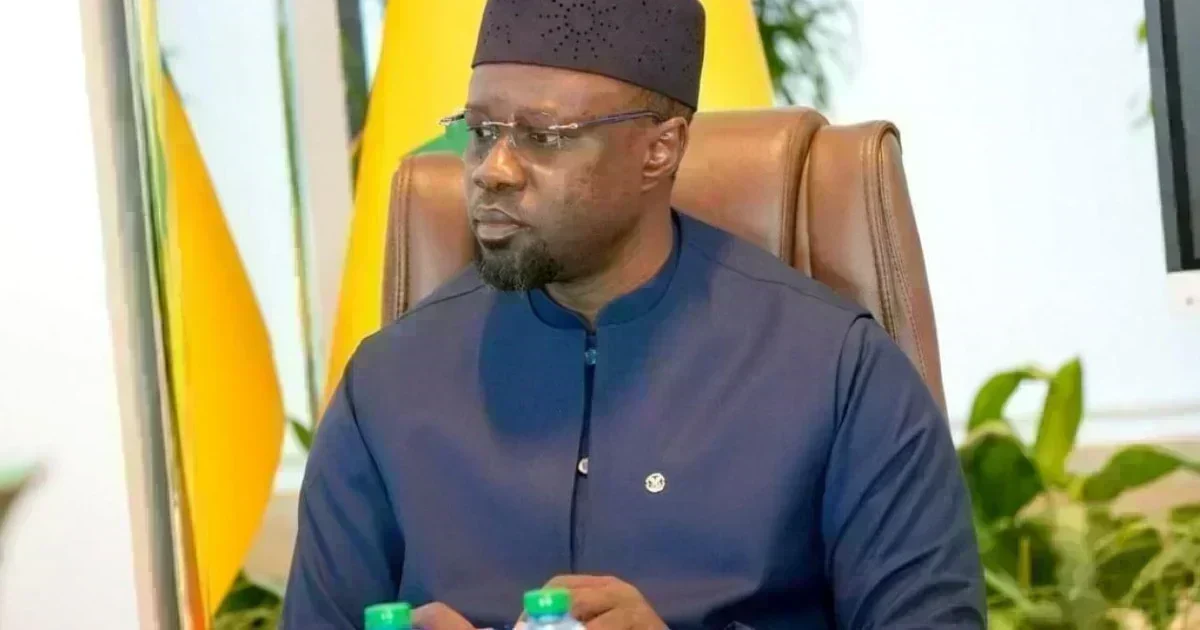
In a historic parliamentary session, Senegal’s Prime Minister Ousmane Sonko disclosed the existence of a 1.77 billion CFA franc political fund under his office’s control—a disclosure that has exposed a long-standing yet opaque financial practice in the country’s governance.
Political funds: a longstanding but rarely discussed practice
The revelation has reignited public debate over the use of discretionary political funds in Senegal, a system that predates Sonko’s tenure. For decades, Senegalese Prime Ministers have had access to these funds, typically amounting to around 1.7 billion CFA francs annually, significantly less than the roughly 11 billion allocated to the President of the Republic. This financial mechanism, shrouded in secrecy and minimal public scrutiny, has operated without major controversy—until now.
May 2026: a turning point in transparency
During a parliamentary session earlier this year, Sonko stunned lawmakers by confirming the existence of the fund and its current amount. His admission marked a sharp departure from previous denials, signaling a shift in how this financial tool is perceived. Rather than advocating for its abolition, Sonko argued for stricter oversight, proposing that the fund be managed under strict parliamentary supervision—a model he cited from certain Western democracies, where the Prime Minister, not the President, oversees such resources.
His push for transparency was not new. The opposition party PASTEF had been vocal about the lack of oversight since 2014, and the issue was a key part of their 2019 electoral platform. Sonko’s disclosure, however, brought the discussion into the national spotlight, forcing a long-overdue conversation about accountability.
Political fallout and the end of an alliance
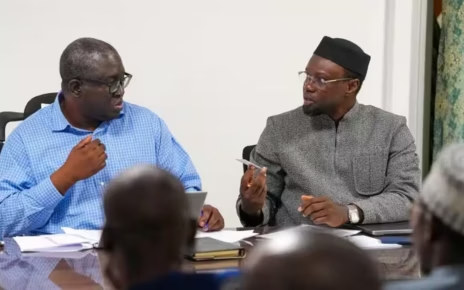
Sonko’s public stance on the fund soon clashed with President Bassirou Diomaye Faye, creating a rift within the ruling coalition. By advocating for increased autonomy for the Prime Minister’s office, Sonko challenged the traditional hierarchy, pushing for a system where the head of government would wield greater financial independence under parliamentary oversight. The President’s response was decisive: Sonko was relieved of his duties, ending an alliance forged in the political transition of 2024.
Further developments emerged in late July 2026, when the Minister of Petroleum and Energy, Abdourahmane Diouf, disclosed that Sonko had reportedly requested an additional budgetary allocation after depleting his annual fund. The revelation reignited controversy, though it remains unclear whether the request was granted. Civil society voices, including activist Moundiaye Cissé of NGO 3D, have since demanded full transparency, calling for the publication of all fund utilization reports for the Prime Minister’s office and the National Assembly over the past two years.